By Michelle Johnson, SpecMyRig research desk. This guide compares published battery specifications, wiring principles, and recurring owner feedback. It is not a hands-on battery test, and product links point to exact product pages for now and may be replaced with affiliate tracking links later; prices and availability can change.
6-Volt vs 12-Volt RV Batteries: Quick Verdict
For lead-acid RV battery banks, two 6-volt GC2 golf-cart batteries wired in series usually beat two 12-volt marine batteries for owners who regularly camp without hookups. The series pair delivers 12 volts at about 225 to 240 amp-hours, with thick plates designed for repeated deep discharge. At a 50 percent depth-of-discharge planning limit, that is roughly 112 to 120 usable amp-hours. Two 12-volt Group 27 batteries in parallel often deliver less usable capacity and shorter cycle life, but they are shorter, simpler to replace one at a time, and can keep the RV running if one battery fails.
Choose 6-volt for repeated off-grid cycling; choose 12-volt for hookups, low-profile fit, and simple replacement.
Who Each Option Suits
Choose two 6-volt batteries if
- You camp off-grid for two or more nights and cycle the bank daily.
- Your battery box can fit taller GC2 batteries, roughly 11 inches high before terminal clearance.
- You can buy and replace batteries in matched pairs.
Choose 12-volt batteries if
- You mostly camp with hookups and need the battery mainly for travel stops and brief outages.
- Your compartment is too short for GC2 height or already fits Group 24, 27, or 31 batteries.
Skip lead-acid altogether if
- You need high inverter loads, fast charging, and maximum usable capacity in limited weight; a properly matched lithium system may fit better, with charger and temperature requirements checked first.
The Wiring Math That Decides Capacity
Series wiring adds voltage and keeps amp-hours the same. Two 6-volt 225 amp-hour batteries in series make a 12-volt 225 amp-hour bank, or 2,700 watt-hours before discharge limits. Parallel wiring keeps voltage the same and adds amp-hours. Two 12-volt 100 amp-hour batteries in parallel make a 12-volt 200 amp-hour bank, or 2,400 watt-hours. Watt-hours are the fair comparison because volts multiplied by amp-hours describe stored energy.
Plan around 50 percent depth of discharge for lead-acid life: about 112 usable amp-hours from a 225 amp-hour 6-volt pair versus about 100 from a 200 amp-hour 12-volt pair, with GC2 cycle life pulling ahead.
Comparison Table
| Factor | Two 6V GC2 in series | Two 12V Group 27 in parallel |
|---|---|---|
| Bank output | 12V at about 225 to 240 Ah | 12V at about 180 to 200 Ah |
| Usable at 50% depth | About 112 to 120 Ah | About 90 to 100 Ah |
| Stored energy | About 2,700 to 2,880 Wh | About 2,160 to 2,400 Wh |
| Plate design | Three thicker plate pairs per battery, built for golf-cart deep cycling | Six thinner plate pairs per battery, often dual-purpose marine design |
| Typical cycle life at 50% depth | Often published in the 750 to 1,200 cycle range for quality GC2 batteries | Often about 200 to 400 cycles for marine dual-purpose batteries |
| Height | About 11 to 12 inches; measure lid clearance | About 9 to 10 inches; easier fit in low boxes |
| If one battery fails | Bank is effectively down until the pair is addressed | The remaining battery may limp along |
| Replacement | Replace as a matched pair | Can replace one at a time, though matched age is still better |
| Charge balance | Series current passes through both batteries evenly | Parallel banks can share current unevenly if cables are not balanced |
What Matters Beyond the Spec Sheet
Deep-cycle design beats starting-battery habits
A GC2 battery exists to be discharged deeply every day and recharged at night. That duty cycle explains its thick plates and heavier construction. A 12-volt marine battery often balances engine starting with moderate deep-cycle use. If your RV lights, pump, furnace, and device charging pull the bank down nightly, the GC2 design is better matched to the job.
Fit, maintenance, and wiring details
Two GC2 batteries commonly weigh about 125 to 145 lb together, and height is the usual fit surprise, so measure lid, terminal, and cable clearance before ordering. Flooded versions need water checks and ventilation; AGM avoids watering but still needs a matching charger profile. For parallel 12-volt banks, use matched batteries, proper fusing, secure hold-downs, and diagonal takeoff, taking RV positive from one battery and negative from the other. Never wire two 12-volt batteries in series for a standard 12-volt RV.
Pros and Cons
6-volt pair
- Pros: more usable amp-hours in typical comparisons, stronger deep-cycle design, even series current, proven golf-cart format.
- Cons: taller and heavy, must be bought and replaced in pairs, one failure disables the bank, flooded versions need maintenance.
12-volt pair
- Pros: shorter fit, simpler single-battery replacement, one battery can keep basic loads alive, familiar Group sizes.
- Cons: often fewer usable amp-hours, shorter deep-cycle life in marine dual-purpose models, parallel current sharing needs careful cabling.
Best 5 RV batteries for 6-volt and 12-volt banks
These five picks show the practical split in this guide: two 6-volt GC2 flooded batteries wired in series for a 12-volt bank, or a single 12-volt lithium battery where weight and usable capacity matter more. Confirm tray size, terminal layout, charger profile, and cold-weather charging limits before buying.
1. Trojan T-105
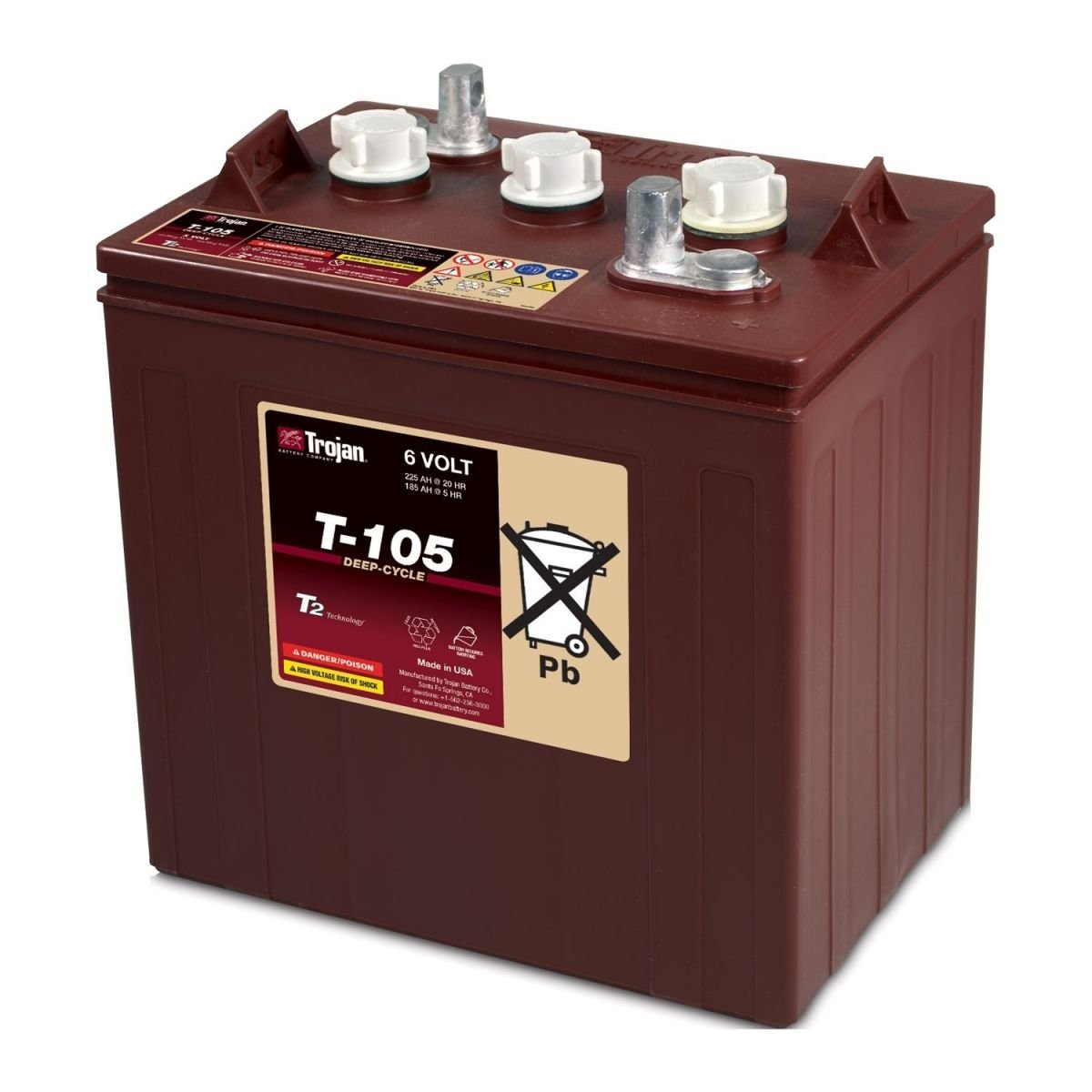
Best for: Proven 6V flooded GC2 bank.
- 6V, 225Ah at the 20-hour rate
- Flooded lead-acid deep-cycle battery in GC2 group size
- 62 lb per battery
- Wire two in series for a 12V bank
Product link is a two-battery pack listing for a 12-volt series bank; capacity and weight above are per battery.
2. Duracell GC2 Golf Car Battery
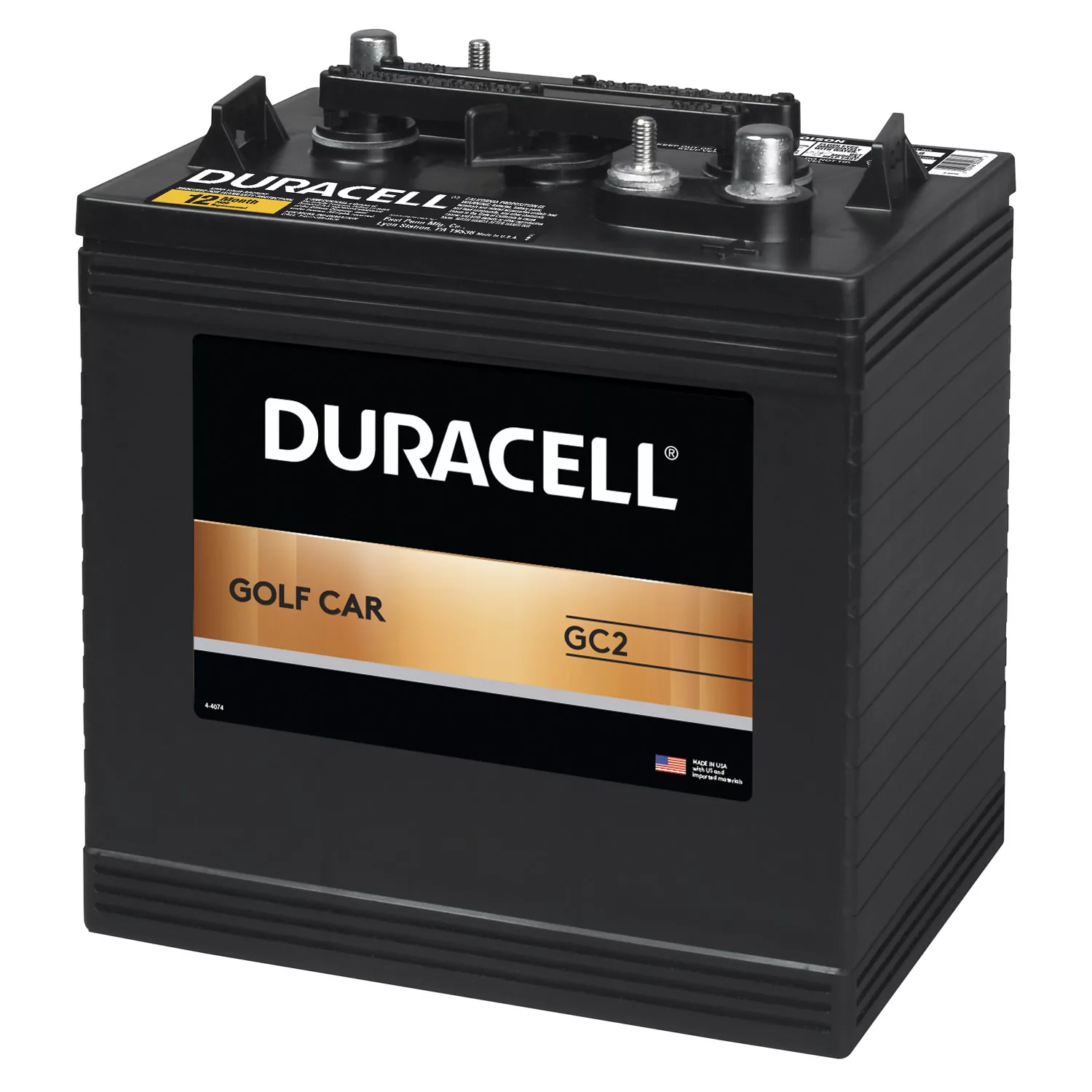
Best for: Budget 6V GC2 option.
- 6V flooded deep-cycle battery, BCI group GC2
- 215Ah at the 20-hour rate
- 395 minutes at 25 amps
- Sold through Sam's Club; 12-month free replacement warranty
3. Renogy 12V 100Ah LiFePO4 Battery with DuoHeat (Core Mini)
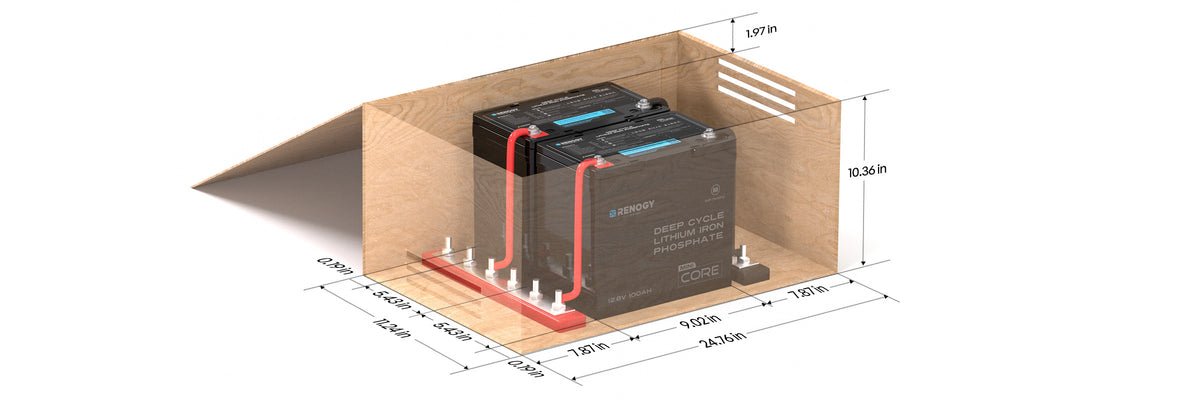
Best for: Compact lithium with cold-weather heating.
- 12.8V 100Ah lithium iron phosphate (LiFePO4)
- Built-in 100A BMS
- DuoHeat self-heating with dual 110W heating pads
- Group 22NF mini case, 9.02 x 5.43 x 8.39 inches, 21.4 lb
4. Battle Born BB10012 100Ah 12V LiFePO4
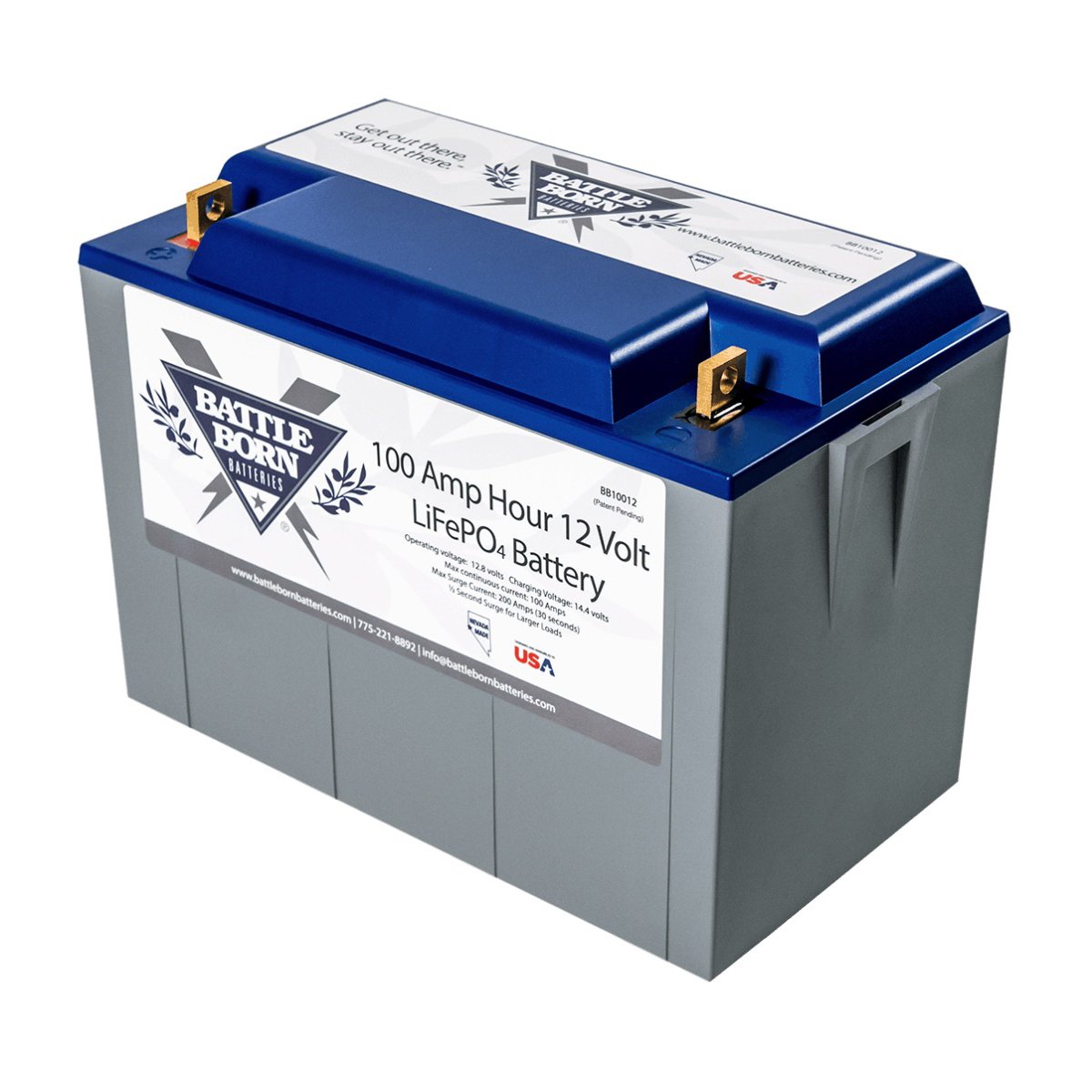
Best for: Premium documented lithium.
- 12V 100Ah LiFePO4 deep-cycle battery
- 100A continuous discharge, 200A surge for 30 seconds
- 3,000 to 5,000 deep-discharge cycles
- 31 lb with IP65-rated sealed case
5. WEIZE 12V 100Ah LiFePO4 Battery
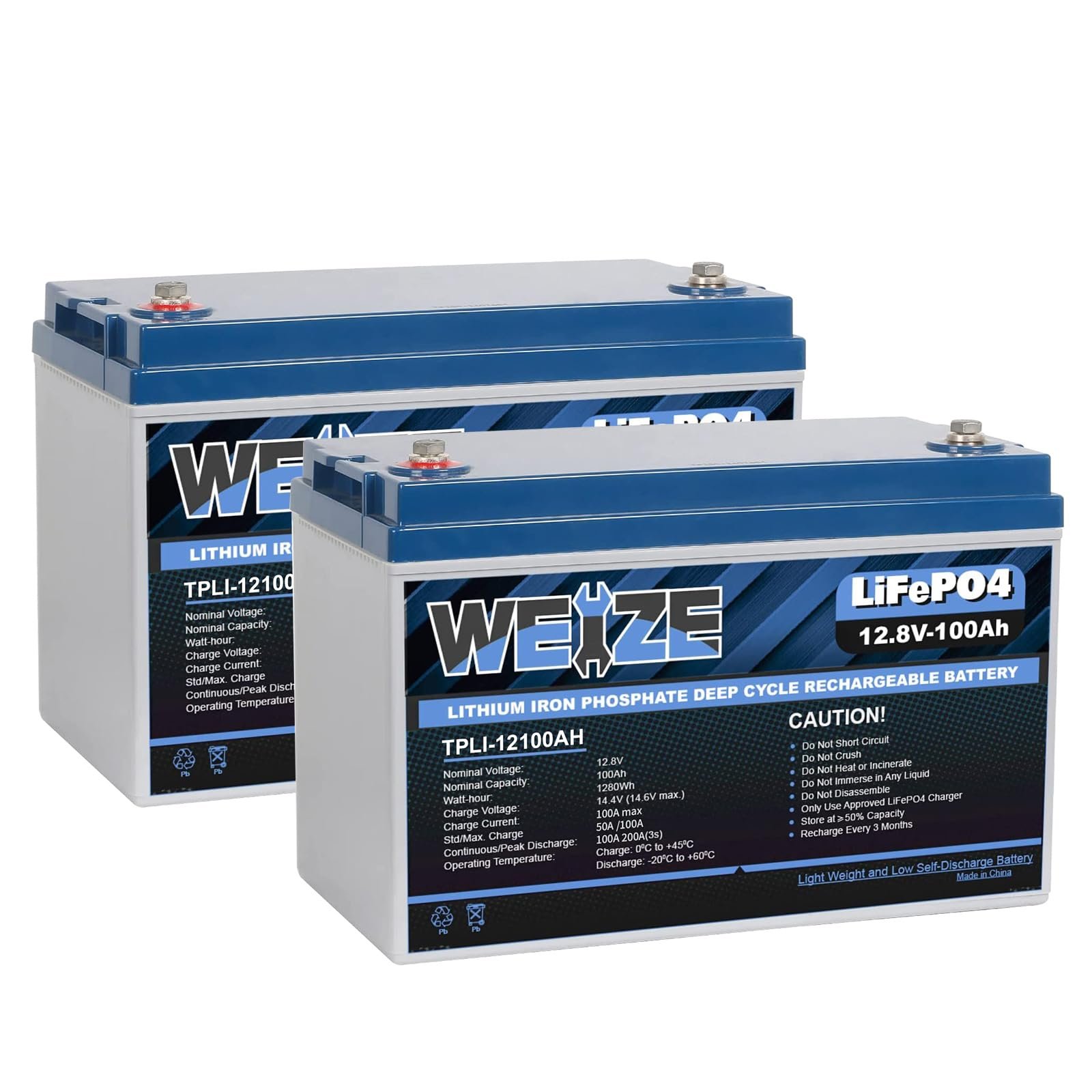
Best for: Value lithium upgrade.
- 12.8V 100Ah LiFePO4, 1280Wh
- Built-in BMS with low-temperature charge cutoff
- Group 31-size case, 13 x 6.77 x 8.48 inches
- Over 2,000 cycles at 100% depth of discharge
Buying Checklist
- Calculate nightly amp-hour use for furnace, lights, pump, fridge controls, fans, and device charging.
- Measure battery-box height, footprint, lid clearance, cable space, and ventilation.
- Confirm your converter or charger supports the chosen flooded or AGM profile.
- Budget for matched batteries, interconnect cables, fusing, hold-downs, and a battery monitor.
- Plan replacement in pairs for 6-volt banks and matched age for parallel 12-volt banks.
- Verify the current price, warranty, and delivery terms on the product page before buying.
Frequently Asked Questions
Are two 6-volt batteries better than two 12-volt batteries?
For repeated off-grid cycling, usually yes. A GC2 series pair typically offers more usable amp-hours and much better cycle life than two marine 12-volt batteries of similar total weight.
Can I use one 6-volt battery in my RV?
No. Standard RV systems expect about 12 volts. One 6-volt battery cannot properly run lights, pumps, furnace controls, and fridge boards. Use two in series.
How many usable amp-hours do I really get?
For lead-acid planning, many owners use about half the nameplate amp-hours. A 225 amp-hour bank therefore provides about 112 usable amp-hours before recharge if you follow a 50 percent depth guideline.
Bottom Line
For lead-acid boondocking, two 6-volt GC2 batteries are the stronger default. For hookup-heavy camping and tight battery boxes, 12-volt batteries remain practical. Measure first, calculate usable amp-hours second, and buy matched batteries third.
Continue with our Champion vs Westinghouse generator guide, RV EMS vs surge protector guide, and Garmin RV 795 review. Read how we review and our affiliate disclosure before buying.