Load Range D vs E is really a question about reserve capacity. Load Range D trailer tires are 8-ply rated and typically run up to 65 psi. Load Range E tires are 10-ply rated and typically run up to 80 psi. The letter does not tell you the exact pounds a tire can carry; tire size and the sidewall maximum load do that. Choose the load range that carries your scaled axle weight with margin, without exceeding the wheel rating.
I’m Michelle Johnson with the SpecMyRig research desk. We compare manufacturer specifications, load-and-inflation guidance, and owner feedback; we do not claim hands-on lab testing. Confirm exact tire and wheel ratings before buying. See how we review and our affiliate disclosure.
Quick verdict: Load Range D vs E trailer tires
Choose Load Range E when Load Range D leaves little reserve capacity, when your trailer runs near its axle ratings, or when the same tire size gains meaningful capacity at 80 psi and your wheels are rated for it. Choose Load Range D when it already carries the load with healthy reserve and matches the trailer placard. Bigger is not automatically better if the wheel, valve stem, or suspension cannot use the extra pressure correctly.
In a common ST225/75R15 example, ratings list about 2,540 lb at 65 psi for D and 2,830 lb at 80 psi for E—roughly 11% more per tire. That gain does not raise GVWR or axle rating.
Comparison table
| Feature | Load Range D | Load Range E |
|---|---|---|
| Ply rating | 8-ply rated | 10-ply rated |
| Typical maximum cold pressure | 65 psi | 80 psi |
| Literal ply count | Not necessarily eight physical plies | Not necessarily ten physical plies |
| Example ST225/75R15 capacity | About 2,540 lb at 65 psi | About 2,830 lb at 80 psi |
| Ride and stiffness | Less stiff at correct pressure | Stiffer; can ride harsher if overinflated for the load |
| Wheel requirement | Wheel must be rated for the load and 65 psi class pressure | Wheel and valve stem must be rated for the load and 80 psi class pressure |
| Best use | Mid-size trailers with adequate reserve on D | Heavier trailers or D setups with thin reserve |
Maximum pressure and load vary by brand and size. The sidewall and the tire maker’s load-and-inflation table govern the exact tire.
Winner by use case
Best when D already has reserve: Load Range D
If your scaled per-tire load is comfortably below the D rating at its specified pressure, staying with D is reasonable. It matches many factory setups and avoids forcing a wheel change. Reserve capacity is the goal, not the highest letter.
Best when the trailer runs heavy: Load Range E
Load Range E wins when the trailer runs near its ratings or shows a thin margin on D tires. The extra capacity can reduce heat stress when inflated correctly, especially when the same size is available in E and the wheels support 80 psi.
Best for rough roads and pothole margin: E, with correct pressure
A stronger casing can help on rough roads, but pressure discipline matters more. An E tire run at D pressure does not deliver E capacity, and an E tire at maximum pressure under a light load can ride harshly. Use the load-and-inflation table for the actual scaled load, within tire and wheel limits.
Best when wheels are the weak link: neither until wheels are checked
If the wheel is rated below the tire’s load or pressure, the wheel is the limit. Many upgrades fail here: the owner buys E tires, then discovers the wheels or rubber valve stems are not suitable for 80 psi service. High-pressure valve stems, often metal clamp-in stems, may be required.
How to calculate what you need
Start with GVWR, axle ratings, and the tire placard. Then weigh the trailer loaded for travel. For a tandem-axle trailer, do not simply divide total weight by four; side-to-side and front-to-rear loads can differ. Required capacity per tire equals the heaviest axle load divided by the number of tires on that axle, plus reserve. If the result is close to the D rating, E may be safer. If it exceeds the E rating, you need a different size, axle, or load plan. Tongue weight is carried by the tow vehicle; trailer tires carry axle load.
Ply rating is not a literal layer count
“10-ply rated” means the tire is built to the strength and pressure class historically associated with ten plies. It does not guarantee ten physical plies or puncture-proof performance. Judge the tire by size, load range, sidewall maximum load, speed rating, age, and manufacturer reputation.
Safety notes
- Never exceed the lower of the tire’s maximum cold pressure and the wheel’s maximum pressure.
- Check pressure cold. Do not bleed air from a hot tire to reach a cold specification.
- Replace valve stems when upgrading pressure class; use stems rated for the pressure and wheel.
- Match load range and size across an axle, and include the spare in the plan.
- Recheck lug-nut torque after wheel service and inspect for cracks around lug holes and valve stems.
- A tire upgrade does not increase GVWR or axle rating.
Best 5 Load Range E trailer tires in ST225/75R15
These five Load Range E examples use ST225/75R15 so you can compare the step up from Load Range D in one common size. Confirm that your wheels, valve stems, and trailer placard support the higher pressure and load before upgrading.
1. Goodyear Endurance ST225/75R15 Load Range E
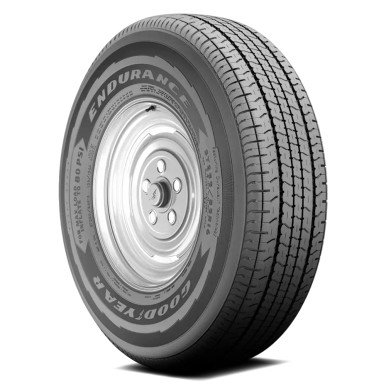
Best for: Load Range E upgrade for 15-inch RV trailers.
- ST225/75R15
- Load Range E, 117/112N
- 2,830 lb max load
- 80 psi max inflation
2. Carlisle Radial Trail HD ST225/75R15 Load Range E
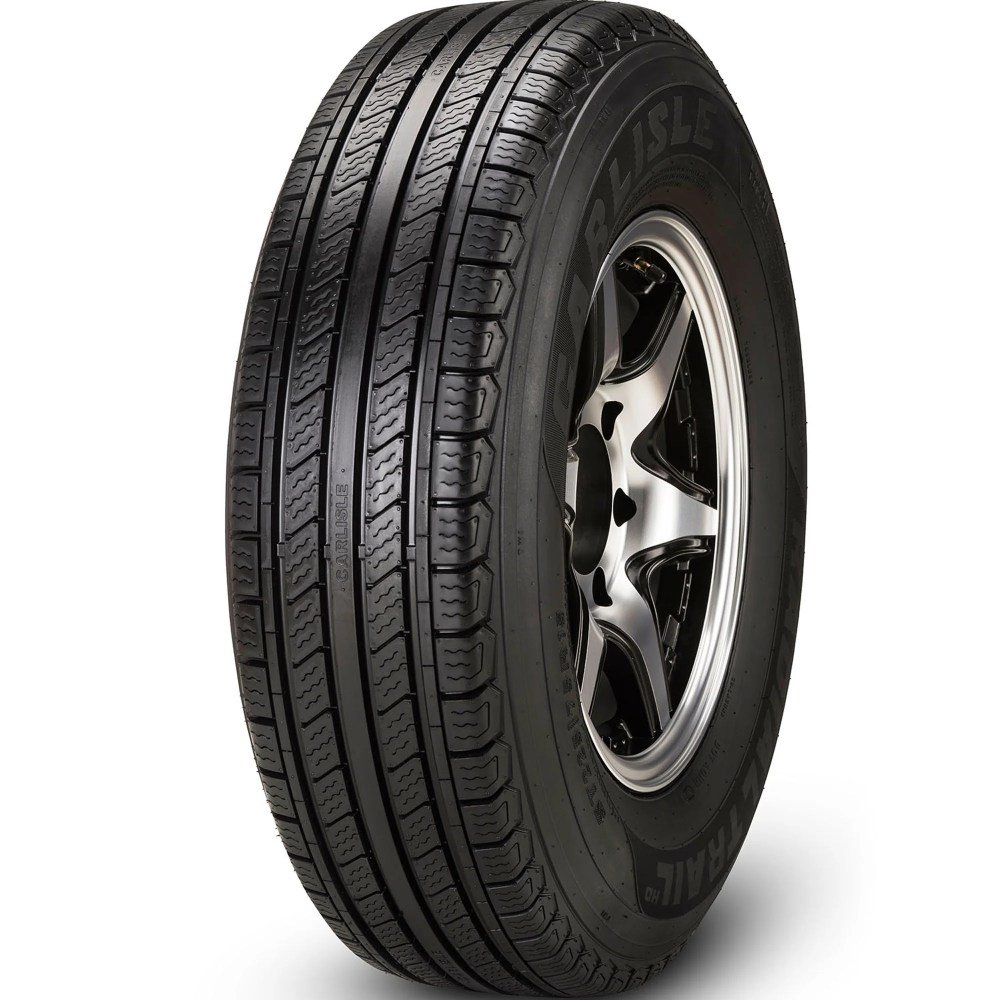
Best for: Load Range E step-up from D in a common ST size.
- ST225/75R15
- Load Range E, 117M
- 2,830 lb max load
- 80 psi max inflation
3. Maxxis M8008 Plus ST Radial ST225/75R15 Load Range E
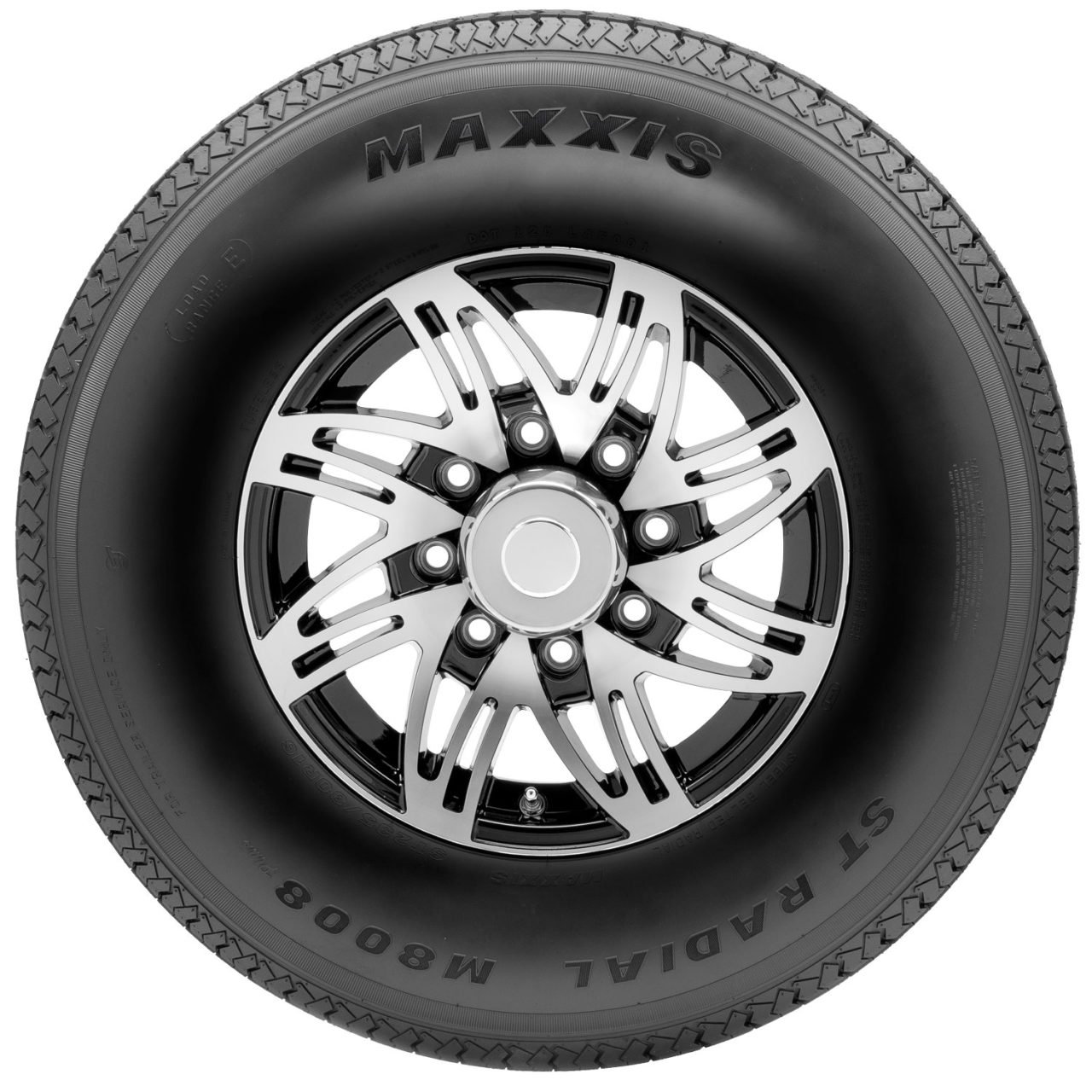
Best for: Load Range E capacity with heat and UV resistance.
- ST225/75R15
- Load Range E, 117/112N
- 2,830 lb max load
- 80 psi max inflation
4. Hankook Vantra Trailer ST01 ST225/75R15 Load Range E
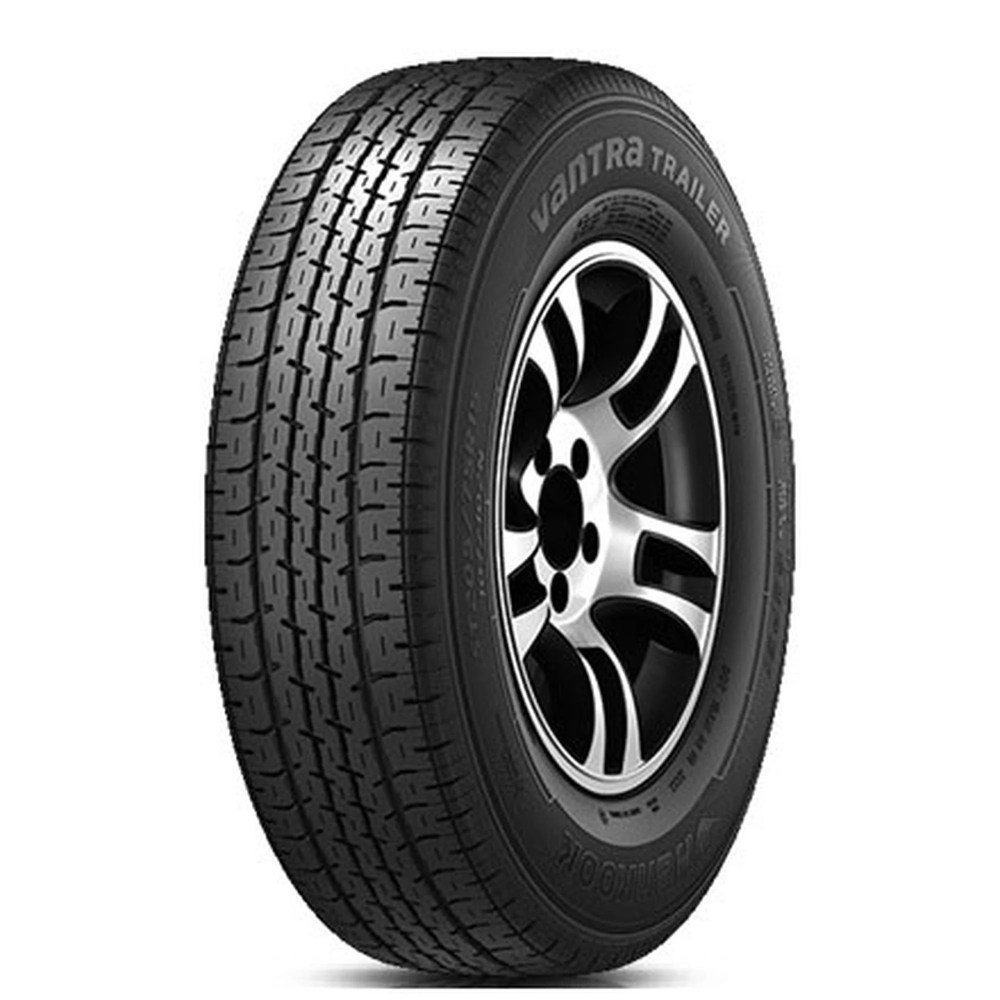
Best for: Load Range E highway stability for regional towing.
- ST225/75R15
- Load Range E, 117/112N
- 2,830 lb max load
- 80 psi max inflation
5. Taskmaster Provider ST225/75R15 Load Range E
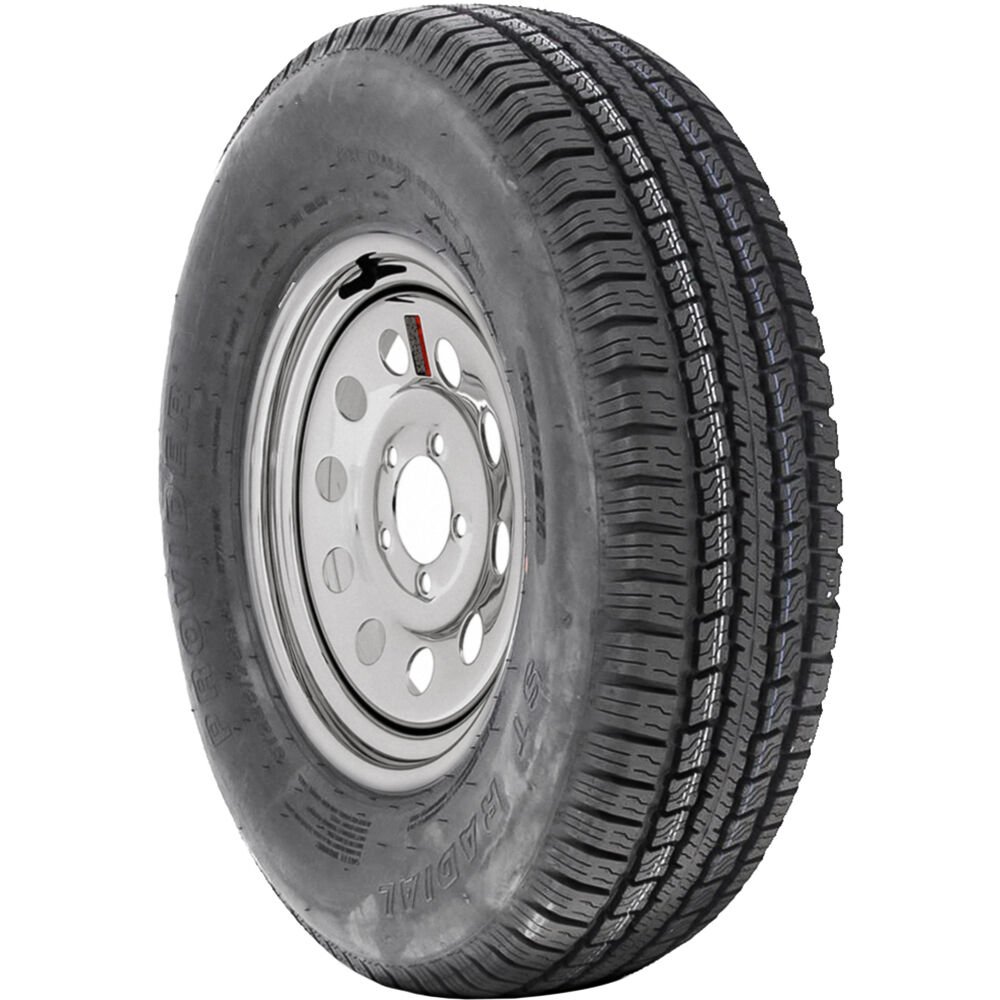
Best for: Basic Load Range E replacement in ST225/75R15.
- ST225/75R15
- Load Range E
- 10-ply rated
- ST radial, DOT compliant
Buying checklist
- Copy the size and load range from the trailer placard and current sidewalls.
- Weigh the loaded trailer and calculate required per-tire capacity with reserve.
- Compare sidewall maximum load at the stated pressure, not just the D or E letter.
- Confirm wheel load rating, maximum pressure, width, offset, and valve-stem rating.
- Check diameter and width clearance against fenders, frame, and suspension travel.
- Verify speed rating, DOT date, and spare compatibility.
FAQ
Can I replace Load Range D tires with Load Range E?
Often yes, if the size is correct and the wheels and valve stems are rated for the E tire’s load and pressure. Confirm clearance and use the correct inflation pressure for the load.
Does Load Range E mean 10 actual plies?
No. It means 10-ply rated strength class. Modern construction may use fewer physical plies with stronger materials.
Should I always inflate Load Range E tires to 80 psi?
Not automatically. Many ST tire makers specify maximum cold pressure for rated load, but the correct pressure depends on the tire maker’s guidance, actual load, and wheel limit. Never exceed the wheel rating.
Will E tires stop blowouts?
No tire eliminates blowout risk. Correct load, pressure, age replacement, speed discipline, and inspection matter more than the letter alone.
Bottom line
Pick D when it carries your scaled load with reserve. Pick E when you need margin and the wheels support it. Read our ST vs LT guide and browse the gear hub.