ST vs LT tires is one of the most argued topics in RV ownership, usually because both tire types can appear to fit the same wheel. Fit is not the same as suitability. ST tires are built for trailer axles. LT tires are built for light trucks and SUVs that steer, brake, and drive. The safest choice starts with what the trailer manufacturer specified, then checks load capacity, wheel rating, speed rating, and clearance.
I’m Michelle Johnson with the SpecMyRig research desk. We compare tire specifications, axle and trailer guidance, and owner feedback; we do not claim hands-on lab testing. Confirm final fit with your trailer and tire documentation. See how we review and our affiliate disclosure.
Quick verdict: ST vs LT tires for trailers
For most RV trailers, choose ST tires in the size and load range specified by the trailer manufacturer. They are designed for trailer sway resistance, high vertical load, and free-rolling axles. LT tires can be appropriate on some trailers—especially heavier trailers originally specified with LT tires—when the load capacity, wheel rating, diameter, width, and manufacturer guidance all line up. Do not choose LT tires just because they have a higher speed rating or because a truck tire looks tougher.
Never use ST tires on a tow vehicle’s steering or driven axles. And avoid passenger-car P-metric tires on trailers; industry guidance derates them for trailer use, and they are not the right tool for RV loads.
Comparison table
| Feature | ST tires | LT tires |
|---|---|---|
| Meaning | Special Trailer | Light Truck |
| Designed for | Free-rolling trailer axles | Steering, braking, and driven truck/SUV axles |
| Sidewall behavior | Stiffer, built to reduce trailer sway | More flexible for ride, steering feel, and traction |
| Load capacity | Often higher than a similar-size LT at its rated pressure | Must be checked size by size; do not assume equivalence |
| Speed rating | Many are 65 mph class; some modern ST tires are rated higher | Often higher speed ratings |
| Tread priorities | Stability, heat control, aging resistance; often shallower tread | Traction, braking, mileage, all-season or all-terrain grip |
| Best use | Most travel trailers, fifth wheels, utility and boat trailers | Tow vehicles; certain trailers factory-specified or properly engineered for LT fitment |
Winner by use case
Best for most travel trailers: ST
If your trailer placard lists an ST size, replacing it with a quality ST tire in the same size and equal or higher load range is the straightforward path. The stiffer sidewall helps the trailer track behind the tow vehicle, and the load rating is intended for trailer service. This is the right default for single-axle and tandem-axle travel trailers that came with ST tires.
Best for heavy fifth wheels originally specified with LT tires: LT, as specified
Some larger trailers are engineered around 16-inch LT tires. In that case, “upgrading” to ST without checking diameter, load capacity, wheel rating, and clearance can create new problems. Follow the trailer manufacturer’s specification. The lesson is not that LT always beats ST; it is that the factory engineering matters.
Best for owners tempted by higher speed ratings: neither, until capacity checks pass
A higher speed rating does not fix underinflation, overload, old rubber, or an underrated wheel. Many modern ST tires exceed the old 65 mph stereotype, but the sidewall speed symbol and load rating still govern.
Why sidewalls matter
A trailer tire does not steer the rig, but it resists lateral forces from wind, road crown, and passing trucks. ST tires use stiffer construction to limit sidewall flex and reduce oscillation. LT tires need flex for grip and ride quality on a truck; that flex can be a stability penalty on a sway-prone trailer. Load capacity also differs by design, and a P-metric tire must be derated for trailer use. The sidewall maximum load for the exact size is the number that matters.
Inflation and load capacity
Underinflation builds heat, and heat destroys tires. Check pressure cold, before driving, with a reliable gauge. For ST tires, many manufacturers instruct owners to inflate to the maximum cold pressure on the sidewall for the rated load. For LT tires, use the tire maker’s load-and-inflation table for the actual load. In both cases, never exceed the wheel’s maximum pressure or load rating.
Calculate need from real weight. Weigh the trailer loaded, ideally by axle and side. Each tire should carry its share with reserve capacity. A tire upgrade does not raise the trailer’s GVWR, axle rating, or wheel rating.
Safety notes
- Replace tires by age as well as tread. Trailer tires often age out before they wear out; check the DOT date code and manufacturer guidance.
- Match tire type, size, and load range across an axle. Do not mix ST and LT tires on the same trailer axle.
- Inspect for sidewall cracking, bulges, uneven wear, and tread separation before trips. Remove a damaged tire from service.
- Confirm wheel load and pressure ratings before increasing load range or pressure.
- Use a torque wrench on lug nuts and recheck torque after wheel service according to the trailer manual.
Best 5 ST trailer tires in ST225/75R15 Load Range E
These five ST examples use the common ST225/75R15 Load Range E size so the load and pressure specs are easy to compare. They are ST picks for trailers whose placard calls for ST tires; an LT tire is a separate fitment decision that needs trailer-maker approval, wheel rating, clearance, and load-table checks.
1. Goodyear Endurance ST225/75R15 Load Range E
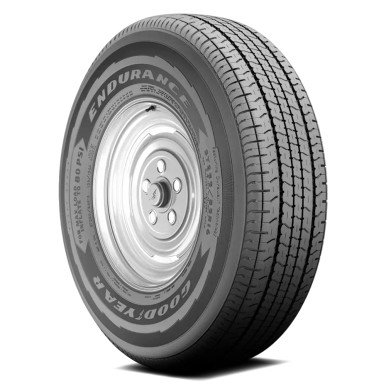
Best for: Best overall ST pick for common 15-inch RV trailers.
- ST225/75R15
- Load Range E, 117/112N
- 2,830 lb max load
- 80 psi max inflation
2. Carlisle Radial Trail HD ST225/75R15 Load Range E
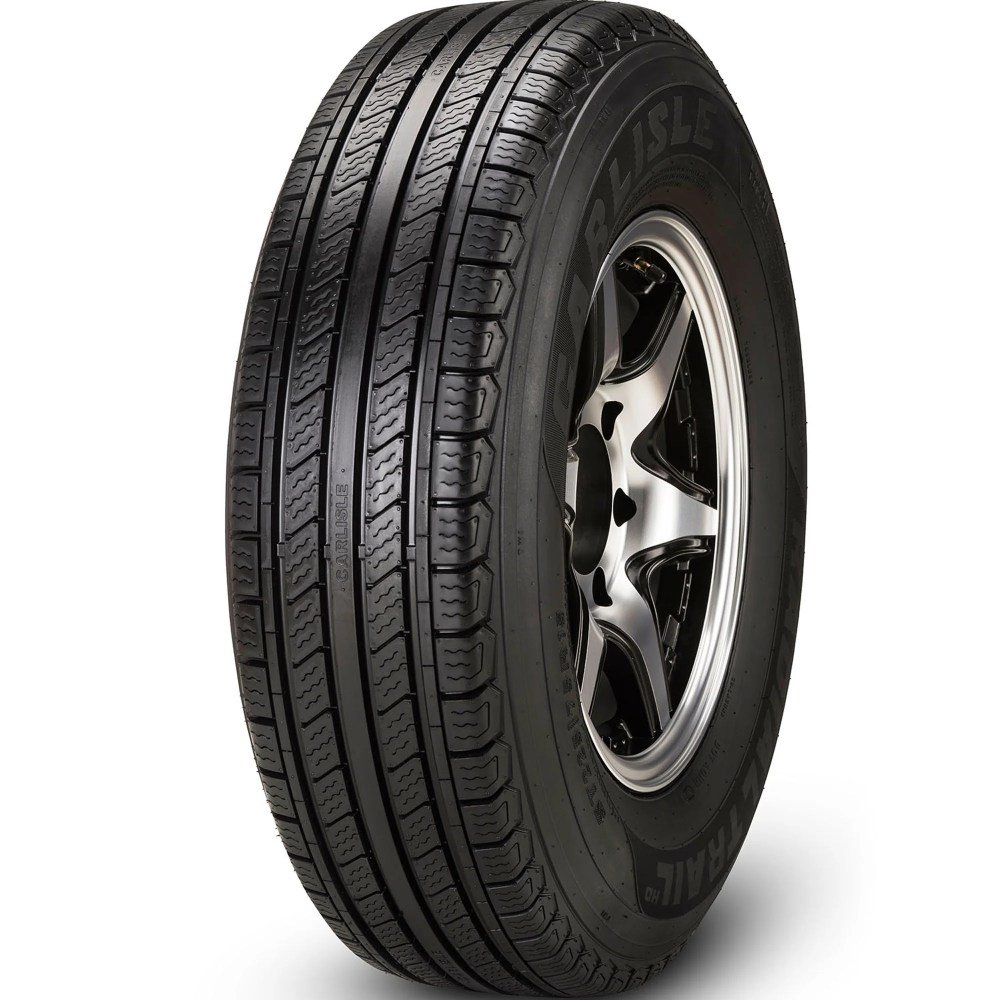
Best for: Versatile ST radial for RV and utility trailers.
- ST225/75R15
- Load Range E, 117M
- 2,830 lb max load
- 80 psi max inflation
3. Maxxis M8008 Plus ST Radial ST225/75R15 Load Range E
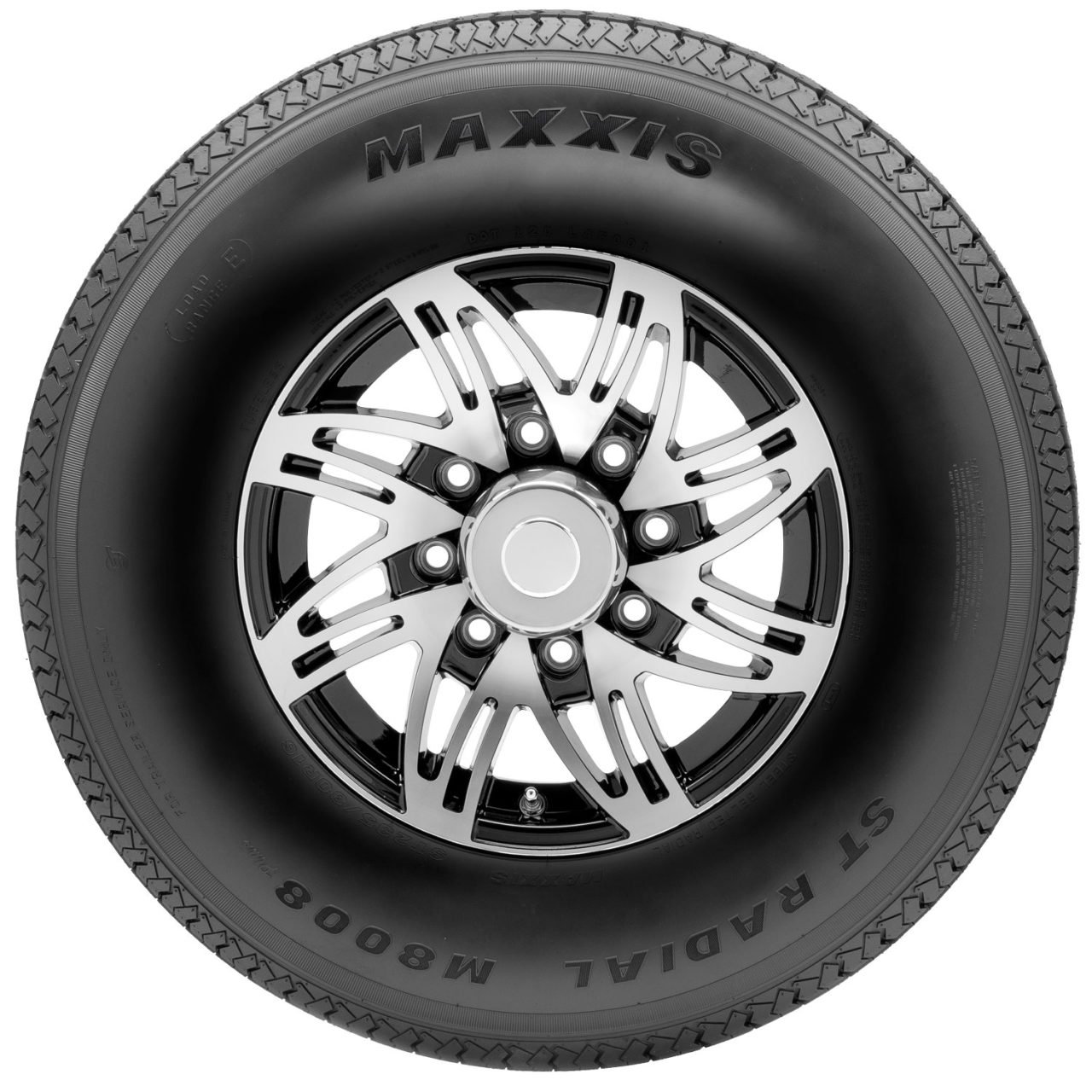
Best for: Heat and UV resistance for long highway towing.
- ST225/75R15
- Load Range E, 117/112N
- 2,830 lb max load
- 80 psi max inflation
4. Hankook Vantra Trailer ST01 ST225/75R15 Load Range E
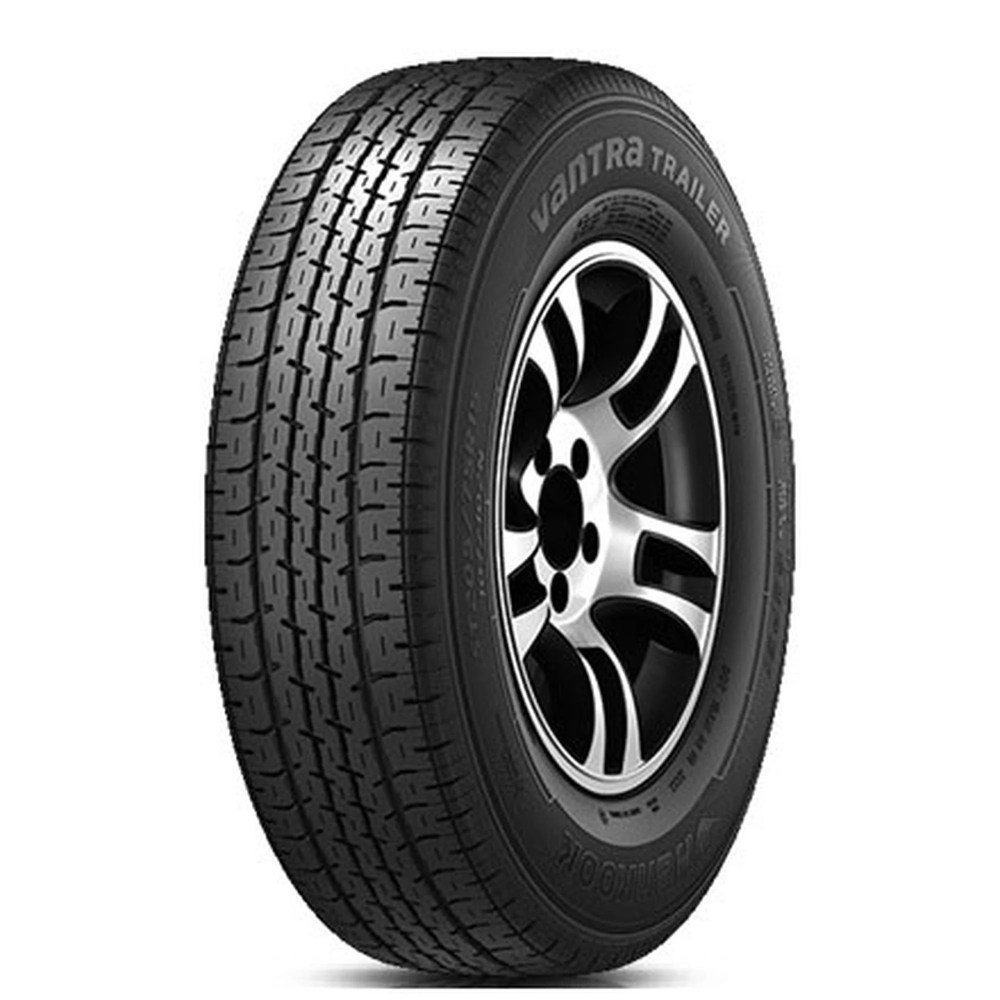
Best for: Highway stability for regional towing.
- ST225/75R15
- Load Range E, 117/112N
- 2,830 lb max load
- 80 psi max inflation
5. Taskmaster Provider ST225/75R15 Load Range E
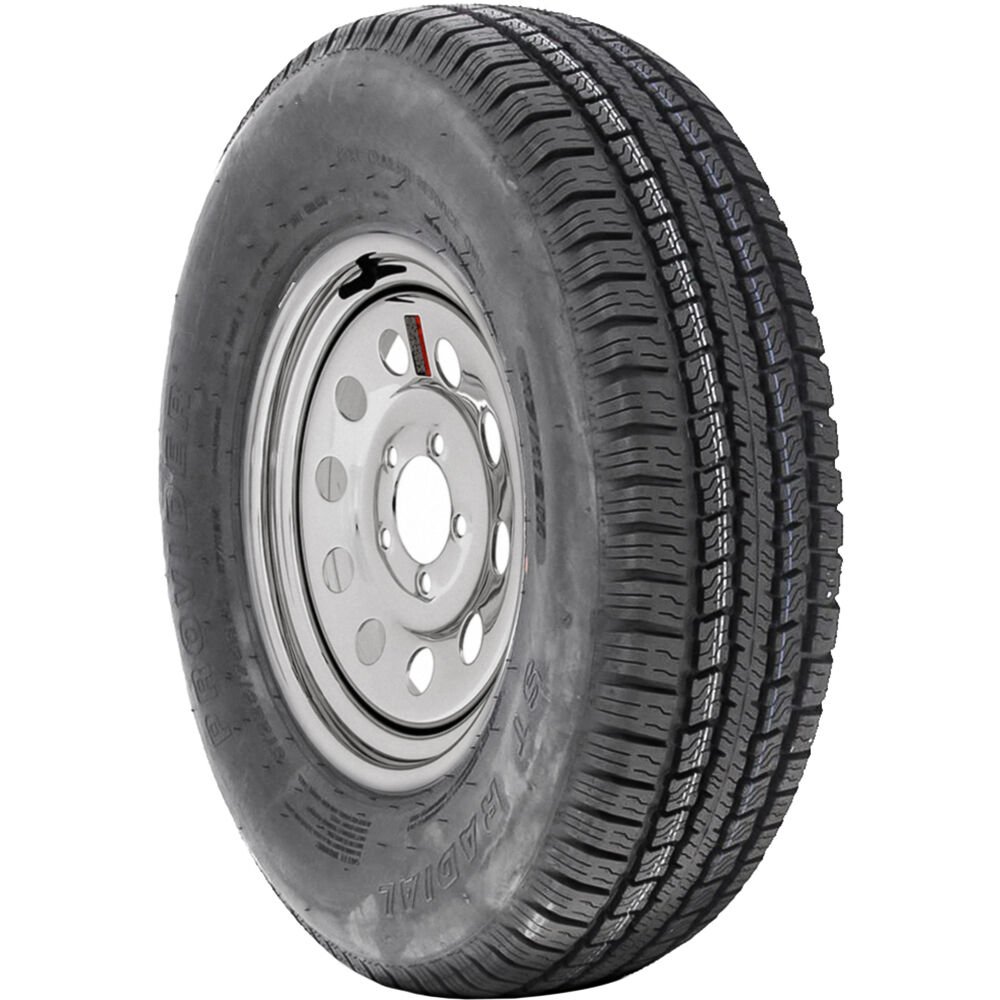
Best for: Basic Load Range E replacement for 15-inch trailers.
- ST225/75R15
- Load Range E
- 10-ply rated
- ST radial, DOT compliant
Buying checklist
- Read the trailer placard and owner’s manual for the specified tire size and load range.
- Weigh the loaded trailer and calculate required capacity per tire with reserve.
- Compare exact sidewall maximum load, speed rating, diameter, and section width.
- Confirm wheel diameter, width, bolt pattern, offset, load rating, and max pressure.
- Check fender, frame, and suspension clearance at full travel.
- Buy a matching spare and confirm the spare carrier and jack can handle the assembly.
FAQ
Can I put LT tires on a travel trailer?
Sometimes, but only when the trailer manufacturer allows it or the fitment is properly engineered with adequate load capacity, wheel rating, clearance, and speed rating. If the trailer was specified with ST tires, ST is the default replacement.
Are ST tires limited to 65 mph?
Many older ST tires were 65 mph class, but some current ST tires carry higher speed ratings. Read the service description on the exact tire and obey the lowest applicable limit.
Can I use passenger tires on a trailer in an emergency?
Industry guidance derates P-metric tires for trailer use, and they are a poor choice for RV loads. Treat any emergency substitution as temporary, reduce load and speed, and replace it with the correct tire as soon as possible.
Bottom line
Choose ST tires for most trailers, LT tires where the trailer was engineered for them, and never let a speed rating outrank load capacity. Next, read our Load Range D vs E guide to choose the right strength class, and use the SpecMyRig gear hub for related towing and RV system comparisons.