The 15 lb vs 20 lb propane tank question causes more confusion than it should, because “15 lb” often describes the amount of propane in an exchange cylinder, not a completely different tank. Many exchange tanks are standard 20 lb cylinders filled with 15 lb of propane. True 15 lb cylinders also exist, but they are less common. Either way, the buying decision comes down to how much fuel you get, how much weight you lift, and whether the cylinder fits your RV or grill setup safely.
I’m Michelle Johnson with the SpecMyRig research desk. We compare manufacturer specifications, cylinder markings, and owner feedback; we do not claim hands-on lab testing. See how we review and our affiliate disclosure.
Quick verdict: 15 lb vs 20 lb propane tank
For most RV and grill owners, a true 20 lb refill is the better value and the simpler choice. It holds about one-third more propane than a 15 lb fill, so you refill less often. A 15 lb fill or smaller cylinder makes sense when you value convenience, lower lifting weight, or a compact spare for a portable grill. The important catch is price per pound: exchange convenience can cost more because you may receive 15 lb instead of 20 lb.
Propane weighs about 4.2 lb per gallon: 15 lb is roughly 3.6 gallons and 20 lb about 4.7 gallons, a difference of roughly 100,000 BTU.
Comparison table
| Feature | 15 lb propane fill/cylinder | 20 lb propane tank |
|---|---|---|
| Propane amount | 15 lb, about 3.6 gallons | 20 lb, about 4.7 gallons |
| Approximate energy | About 322,000 BTU | About 430,000 BTU |
| Common source | Exchange cylinders, some smaller specialty cylinders | Refill stations, new grill/RV cylinders |
| Full lifting weight | Depends on cylinder; an exchange 20 lb cylinder with 15 lb of fuel is still a steel tank | Often about 37–38 lb total, based on tare weight plus 20 lb of propane |
| Best use | Occasional grilling, backup supply, lighter handling | Regular grilling, RV tongue-mount setups that accept 20 lb cylinders |
| Main downside | Runs out sooner; exchange may cost more per pound | Heavier and slightly more storage space |
Winner by use case
Best for most RVs: 20 lb
Many travel trailers carry 20 lb or 30 lb cylinders on the tongue. If your RV was designed for 20 lb cylinders, stay with that size unless the manufacturer allows a change and the hold-down, regulator, hoses, and cover fit correctly. A full 20 lb refill gives the longest runtime for furnace, water heater, stove, and fridge.
Best for occasional grilling: 15 lb exchange
If you grill a few times a month and value speed over cost per pound, exchange is convenient. Check the net weight: a 15 lb exchange starts with 25% less propane than a proper 20 lb refill.
Best for portable grills and small spaces: smaller may win
Some portable grills are designed around 1 lb bottles or small refillable cylinders. Use only hoses, regulators, and adapters approved by the appliance manufacturer. A bigger tank is not better if it makes the setup unstable or forces unsafe hose routing.
Best for heavy grill users: 20 lb refill, plus a spare
Frequent grillers usually do better with a properly refilled 20 lb cylinder and a second cylinder as backup. Store spares upright, secured, and outdoors in a ventilated area away from ignition sources.
How long will each tank last?
Runtime depends on burner output. Divide the tank’s BTU content by the appliance’s BTU-per-hour rating. A grill running at a combined 30,000 BTU per hour would use a 15 lb fill in roughly 10–11 hours of continuous full-output operation and a 20 lb fill in roughly 14 hours. Real grilling uses lower settings, so calendar time is longer. An RV furnace cycling through a cold night can consume propane far faster than a grill.
Refill vs exchange
Refilling a cylinder you own usually gives the full rated amount, subject to the 80% fill rule and cylinder condition. Exchange is faster, but the net fill may be 15 lb. Compare cost per pound, not just sticker price. Check collar markings for tare weight, water capacity, manufacture date, and requalification date. DOT cylinders generally need requalification after 12 years and then at intervals depending on method. If a station refuses your tank, exchange or replace it.
Safety notes
- Keep cylinders upright and secured during transport and use. Never store propane cylinders indoors, in a basement, or in an enclosed living space.
- Check connections for leaks with an approved leak-detection solution after changing a cylinder. If you smell gas, close the valve if it is safe to do so, move away, and contact emergency services or your propane provider.
- Use only OPD-equipped cylinders and regulators/hoses rated for the appliance. Do not defeat safety devices or overfill a cylinder.
- RV onboard propane is regulated to low pressure. Many portable grills need their own regulator or a manufacturer-approved conversion. Do not connect a high-pressure grill directly to an RV low-pressure quick-connect unless the grill maker provides that exact setup.
- Keep cylinders away from heat and sparks. Inspect hoses before each trip.
Best 5 refillable propane tanks for RV use
These five refillable tanks show the ownership side of the 15 lb vs 20 lb question: a refillable 20 lb cylinder can be filled to its rated capacity, while exchange tanks are commonly filled to 15 lb. Confirm valve type, height, and whether the tank ships empty before buying.
1. Flame King YSN201b 20-Pound Steel Propane Tank
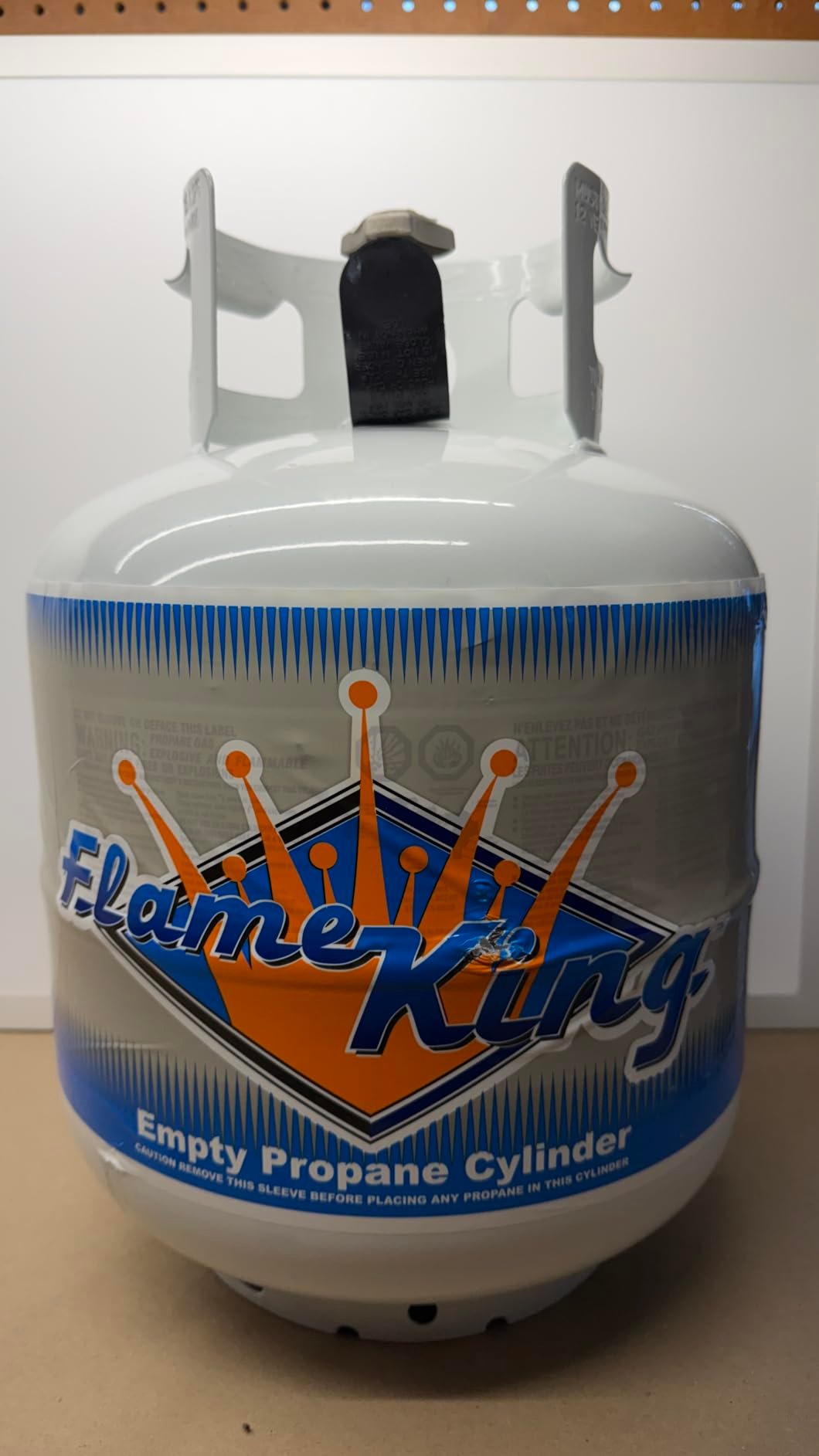
Best for: Standard refillable 20 lb tank for grills and RV spare use.
- 20 lb steel propane cylinder
- Type 1 overflow protection device valve
- Pre-purged vacuum-ready tank that arrives empty
- Powder-coated welded steel; 12 x 12 x 17.8 in
2. Worthington Pro Grade 20-Pound Refillable Propane Tank
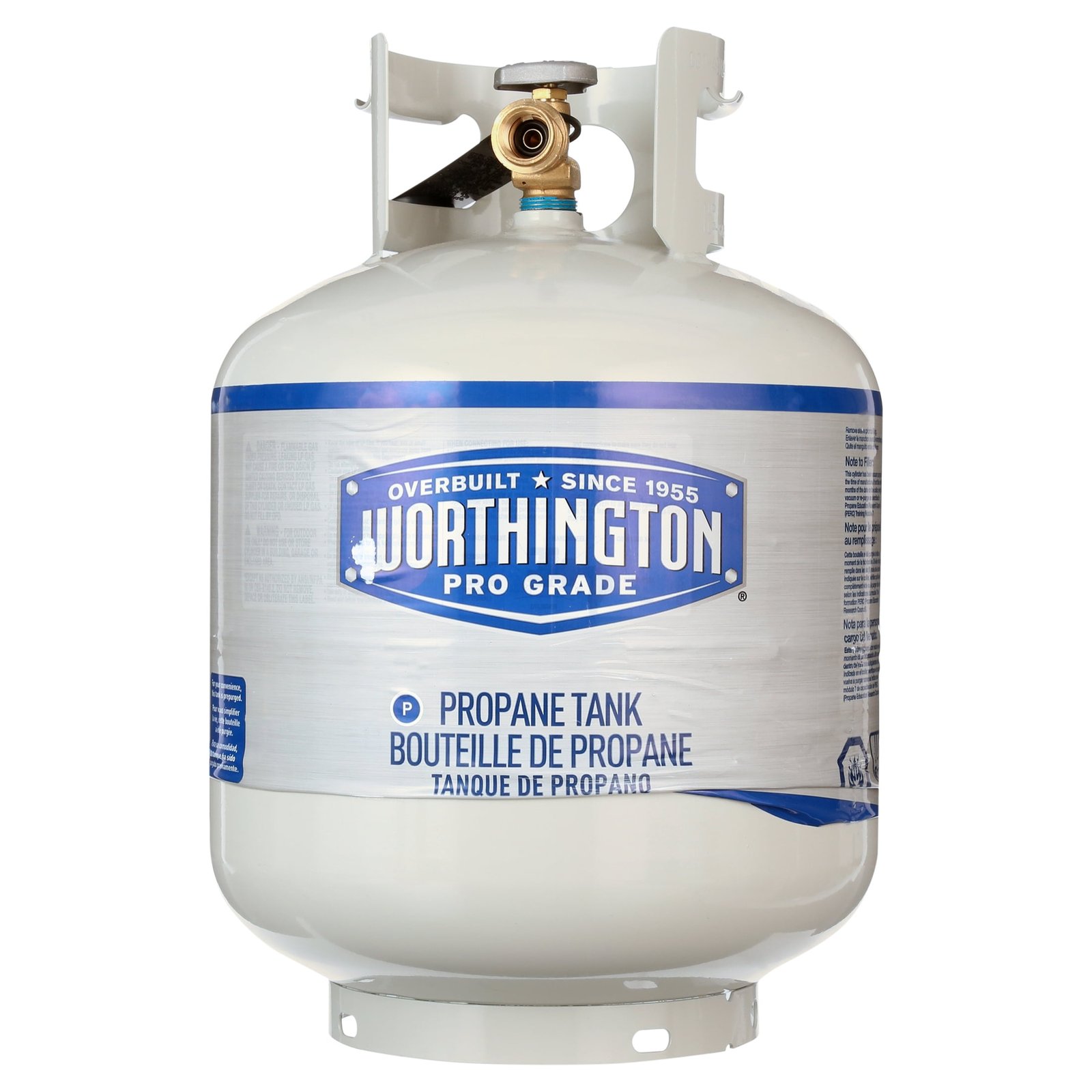
Best for: 20 lb refillable tank buyers who want an OPD valve with gauge.
- 20 lb refillable propane tank
- OPD valve with gauge
- Propane not included; tank must be filled before use
- Steel cylinder format for standard grill/RV propane connections
3. Manchester Tank 10504.17 20 lb Propane Cylinder
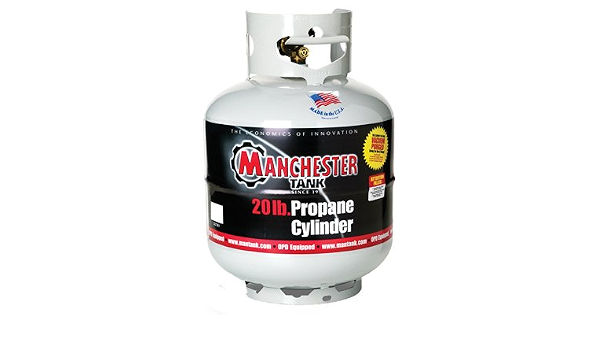
Best for: 20 lb refillable cylinder with published DOT cylinder specs.
- 20 lb propane cylinder
- QCC1 Acme valve with OPD overfill protection
- Gray powder-coated finish with scalloped footring
- 12.2 x 12.2 x 18 in; DOT 4BA240 cylinder class
4. Flame King YSN-301 30-Pound Steel Propane Tank
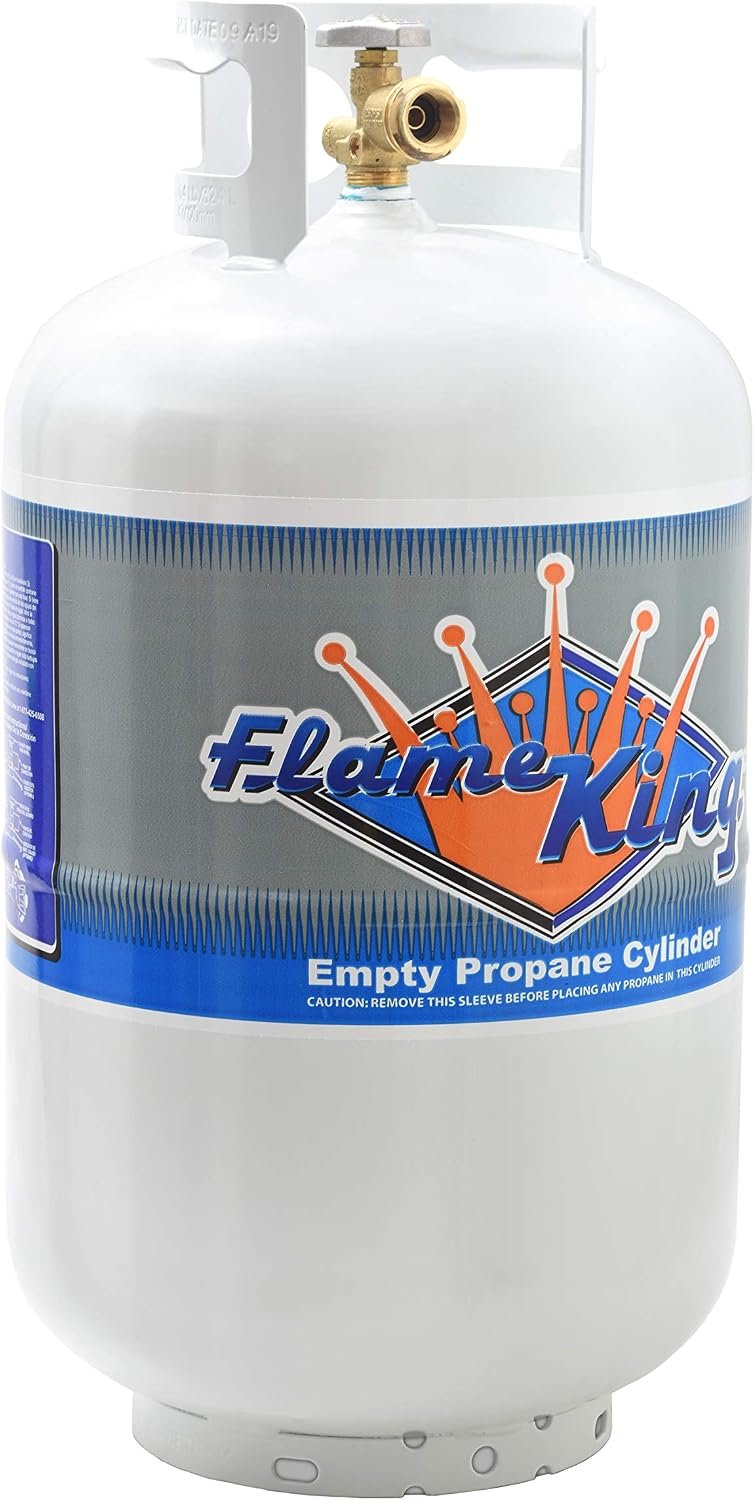
Best for: RV owners who can fit a taller 30 lb refillable cylinder.
- 30 lb steel propane cylinder
- Type 1 overflow protection device valve
- Pre-purged vacuum-ready tank that arrives empty
- DOT and Transport Canada compliant; 12 x 12 x 24 in
5. Ignik Gas Growler Deluxe 5-Pound Propane Tank
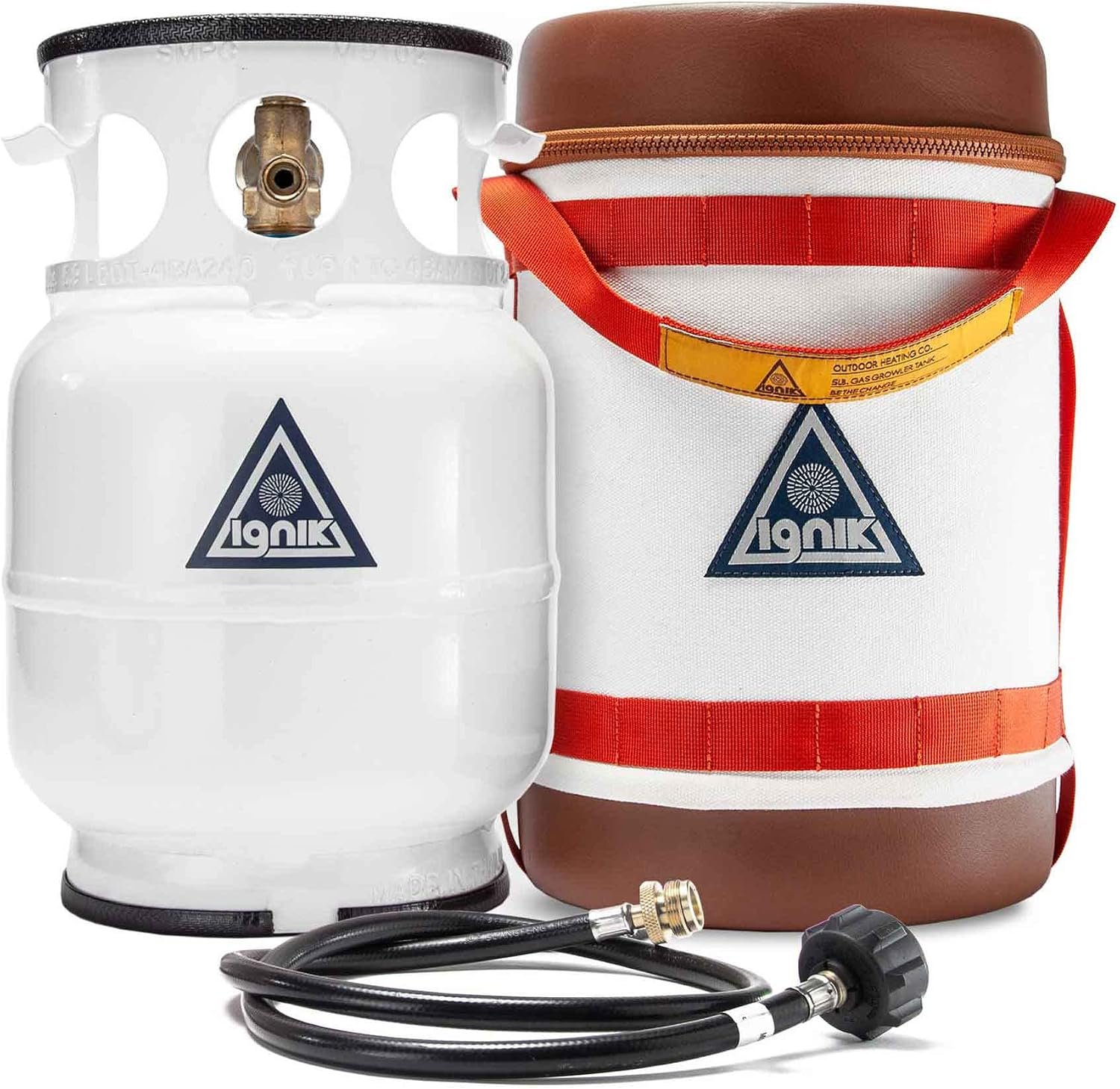
Best for: Portable refillable propane for camp stoves, heaters, and small grills.
- 5 lb / 1.2 gal refillable propane tank
- DOT-approved welded steel tank
- Includes 4 ft adapter hose and carry case
- 14 x 9 x 9 in portable format
Buying checklist
- Confirm whether “15 lb” means a true cylinder size or a 15 lb fill in a 20 lb exchange cylinder.
- Check net weight, tare weight, manufacture date, and requalification date on the collar.
- Match cylinder size to the RV hold-down, cover, regulator, and hose length.
- Estimate runtime from appliance BTU ratings and your cold-weather furnace use.
- Compare refill cost per pound with exchange cost per pound.
- Use only manufacturer-approved hoses, adapters, and pressures.
FAQ
Is a 15 lb propane tank smaller than a 20 lb tank?
Sometimes, but often a 15 lb exchange is a standard 20 lb cylinder containing 15 lb of propane. Read the net-weight label and collar markings instead of assuming from the cage or color.
How many gallons are in 15 lb and 20 lb of propane?
Using about 4.2 lb per gallon, 15 lb is roughly 3.6 gallons and 20 lb is roughly 4.7 gallons. Temperature and fill practice cause small variations.
Should an RV carry 15 lb or 20 lb cylinders?
Use the size the RV manufacturer designed for the mount and regulator setup. If the RV accepts 20 lb cylinders, the fuller refill usually gives better runtime and value.
Bottom line
Choose a true 20 lb refill for regular RV and grill use. Choose a 15 lb exchange when convenience matters more than cost per pound. Pair this with our 30-amp vs 50-amp guide and the SpecMyRig gear hub.