The Dometic 320 vs 310 decision is mostly about bathroom space, bowl comfort, and weight. Both are gravity-flush RV toilets with ceramic bowls in the standard models most shoppers compare. The 320 is the larger, more residential-feeling choice. The 310 gives you a ceramic bowl in a shorter footprint. The 300 is the lightweight plastic alternative that still makes sense when every pound and every inch of rough-in space matters.
I’m Michelle Johnson with the SpecMyRig research desk. We compare Dometic specifications, installation dimensions, and owner feedback; we do not claim hands-on lab testing. See how we review and the affiliate disclosure.
Quick verdict: Dometic 320 vs 310 vs 300
Buy the Dometic 320 if your bathroom has room for its deeper footprint and 11-inch rough-in. It is the comfort pick, with an elongated ceramic bowl and enameled wood seat. Buy the Dometic 310 if you want ceramic but need a shorter toilet and a 10-inch rough-in. Buy the Dometic 300 only when light weight, tight rough-in space, or the lowest complexity matters more than ceramic feel and long-term surface durability.
The most common buying mistake is ordering by reputation instead of dimensions. Dometic’s own manual lists different rough-in requirements for these models. If the flange centerline is too close to the wall, the “better” toilet may not install cleanly.
Comparison table
| Feature | Dometic 300 | Dometic 310 | Dometic 320 |
|---|---|---|---|
| Bowl material | Polypropylene | Vitreous ceramic | Vitreous ceramic |
| Seat material | Polypropylene | Polypropylene in the manual specification | Enameled wood |
| Standard seat height | 18.25 in | 18 in | 18.25 in |
| Overall depth, standard height | 19.75 in | 19 in | 22 in |
| Minimum rough-in | 8.5 in | 10 in | 11 in |
| Low-profile version | 301 | 311 | 321 |
| Approximate weight class | Lightest, roughly 8 lb | Midweight, roughly 23 lb | Heaviest, roughly 37 lb |
| Best fit | Weight-sensitive rigs and tight rough-ins | Ceramic comfort in a compact bathroom | Residential feel when space allows |
Confirm exact SKU dimensions and weight in the Dometic manual before buying.
Winner by use case
Best overall comfort: Dometic 320
The 320 is the one owners usually describe as closest to a home toilet. The elongated ceramic bowl and full-size enameled wood seat are the reasons. Ceramic is also easier to wipe clean and less likely to hold odors or scratches than plastic. The tradeoffs are real: it is the deepest of the three, needs the most rough-in space, and adds the most weight. In a larger fifth wheel or Class A bathroom, those tradeoffs are often worth it.
Best compact ceramic upgrade: Dometic 310
The 310 is the balanced pick. It keeps the ceramic bowl, which is the main upgrade over the 300, while staying shorter front-to-back than the 320. That matters in travel trailers where knees, shower doors, and cabinet corners compete for the same few inches. If your rough-in is around 10 inches and the 320 will not fit, the 310 is not a consolation prize; it is the correct engineering fit.
Best for ultralight or tight installations: Dometic 300
The 300’s plastic construction makes it much lighter and gives it the smallest rough-in requirement. That matters in small trailers, truck campers, and weight-critical builds. The downside is feel and surface durability: plastic can scratch, stain, and feel less solid than ceramic.
Best for raised platforms: low-profile 301, 311, or 321
If your toilet sits on a raised box or wheel-well platform, look at the low-profile versions. Dometic lists seat heights around 13.5–14 inches for those models, compared with about 18 inches for standard height.
Fit comes before features
Measure from the center of the floor flange to the back wall, then compare that number with the model’s rough-in requirement. Also measure side clearance, door swing, lid-open height, and knee space. The 320’s 22-inch depth surprises people: a toilet can bolt down and still crowd the door or vanity. These gravity-flush models install directly above a holding tank; they are not drop-in substitutes for macerating or cassette systems.
Cleaning, odor, and ownership
Ceramic bowls generally clean up more easily and resist surface damage better than plastic. Still, no RV toilet stays odor-free by itself. A good bowl seal, enough water in the bowl, correct tank treatment, and a working roof vent matter as much as bowl material. Owner feedback commonly praises the 320’s seat comfort and the 310’s balance of size and ceramic durability. Budget for a new floor seal and inspect the flange before installation.
Safety and installation notes
- Shut off water and relieve pressure before removing the old toilet. Have towels and a container ready; residual water will spill.
- Replace the floor seal and inspect the flange for cracks. A poor seal can allow sewer gas and leaks.
- Do not overtighten mounting hardware on a ceramic toilet. Follow Dometic’s torque and installation instructions for the exact model.
- Confirm the toilet is intended for installation directly above a holding tank. Do not adapt a gravity-flush model to a system it was not designed for.
- Test for leaks at the water valve and base before closing up access panels or traveling.
Best 5 RV toilets to compare
These five toilets cover the ceramic, lightweight plastic, and portable choices in this comparison. Measure depth, seat height, floor-flange position, and water-connection clearance before ordering.
1. Dometic 320 Series Standard Height RV Toilet 302320081
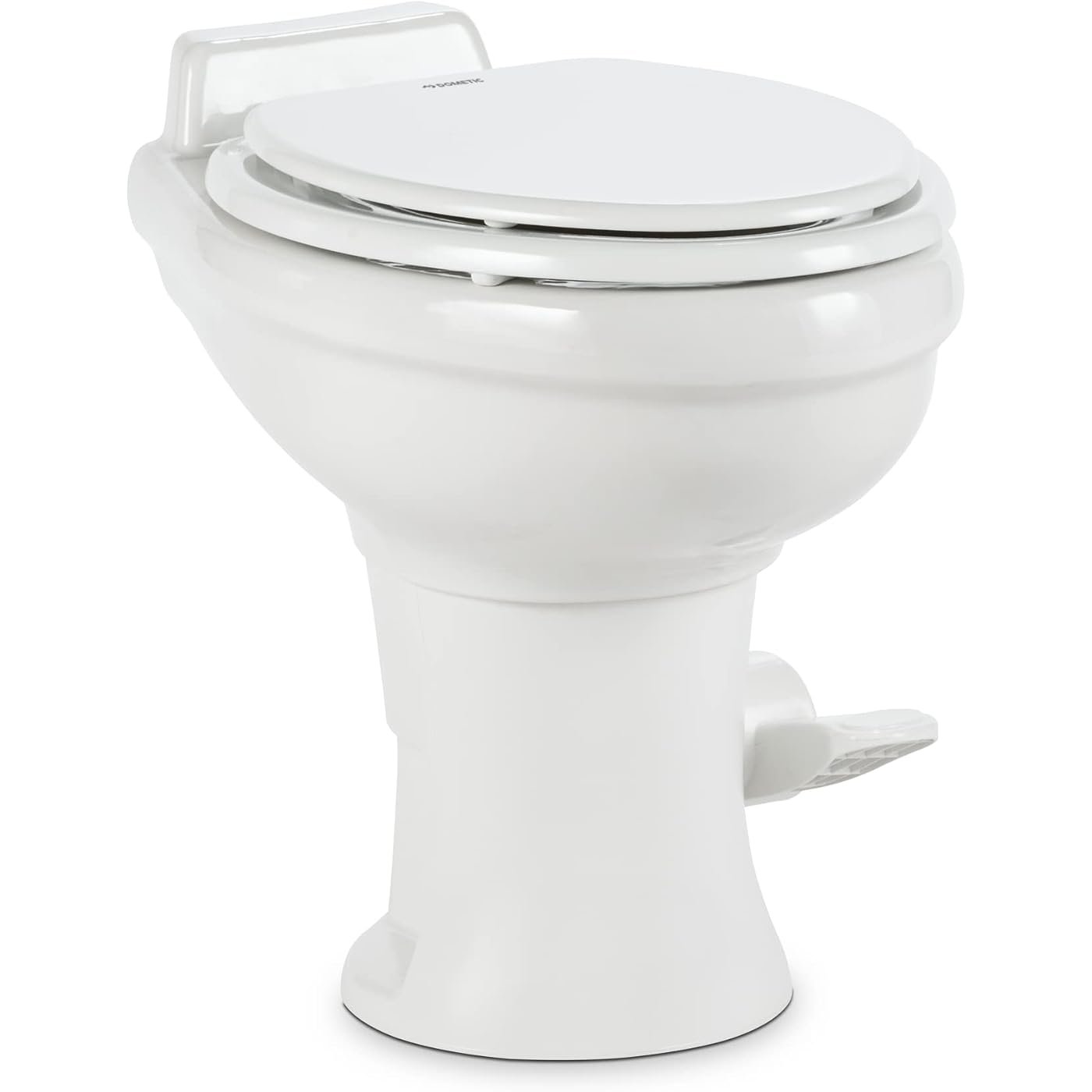
Best for: RV owners wanting an elongated ceramic bowl and residential-style seat.
- Elongated vitreous ceramic bowl with enameled wood seat
- Standard-height gravity-flush toilet; 22D x 14.75W x 19.75H in
- Foot-pedal flush uses as little as 1 pint per flush
- Two-bolt installation with quick-access water connection
2. Dometic 310 Standard Toilet 302310081
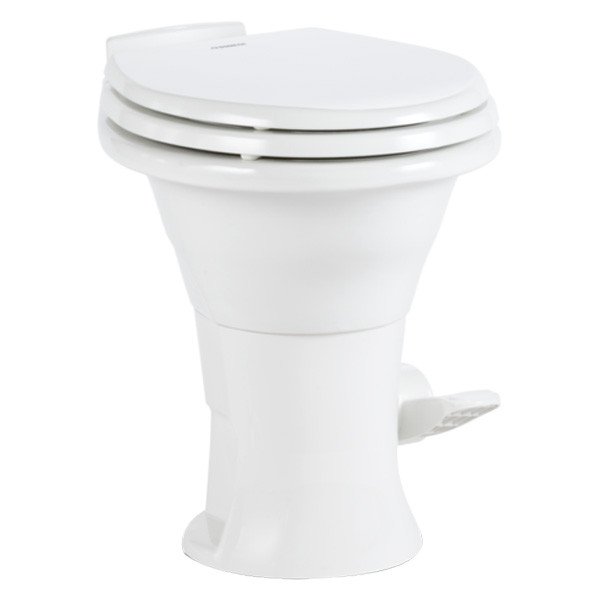
Best for: RV owners wanting a ceramic bowl in a shorter-depth footprint than the 320.
- Ceramic bowl with plastic base and slow-close seat
- Gravity PowerFlush foot-pedal operation
- 19D x 15W x 20H in manufacturer comparison size
- Uses as little as 1 pint per flush
3. Dometic 300 Series Standard Height Toilet 302300071
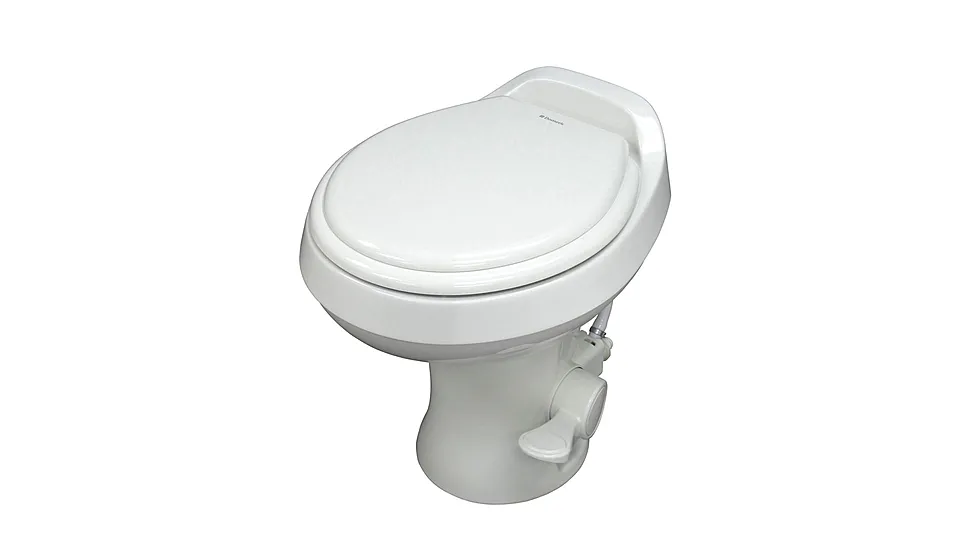
Best for: Weight-sensitive RVs wanting a lightweight full-size toilet.
- Polypropylene bowl, base, and seat
- Triple-jet gravity flush with foot pedal
- Uses as little as 1 pint per flush
- Two-bolt installation with quick-access water connection
4. Thetford Aqua-Magic VI High Profile 31835
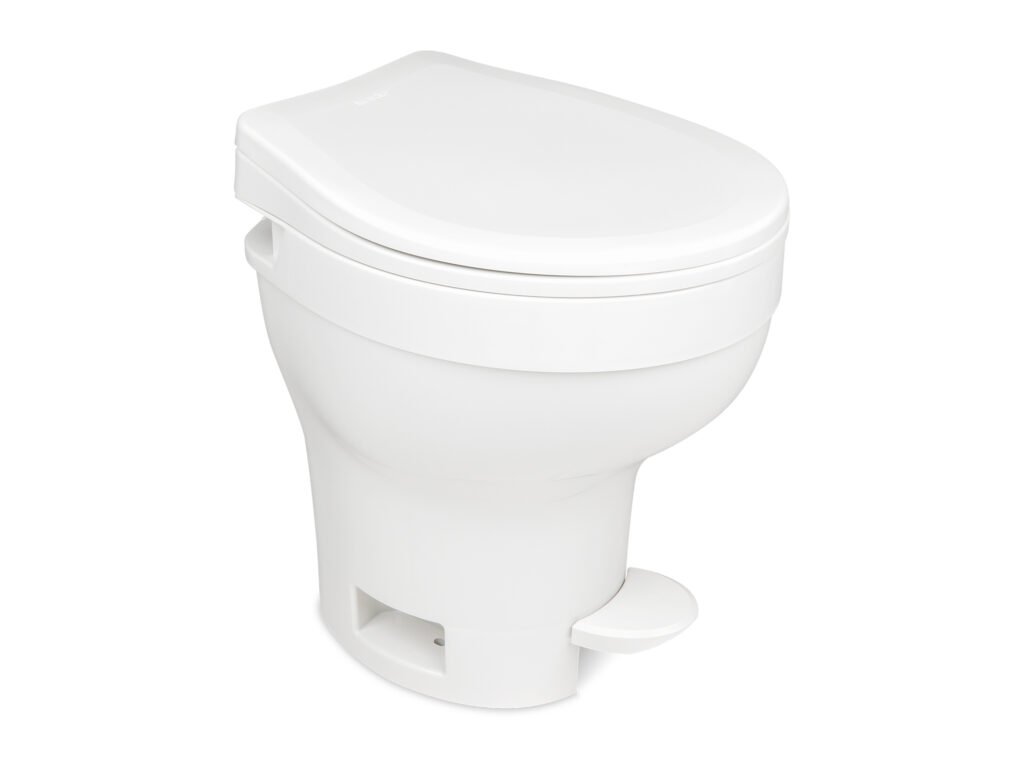
Best for: Lightweight permanent RV toilet with taller seating and a slow-close seat.
- Lightweight permanent polypropylene RV toilet
- High-profile model with ADA-compliant 18-inch seat height
- Slow-close seat and cover
- Foot flush designed to minimize floor-space interference
5. Camco 2.6-Gallon Portable Toilet 41531
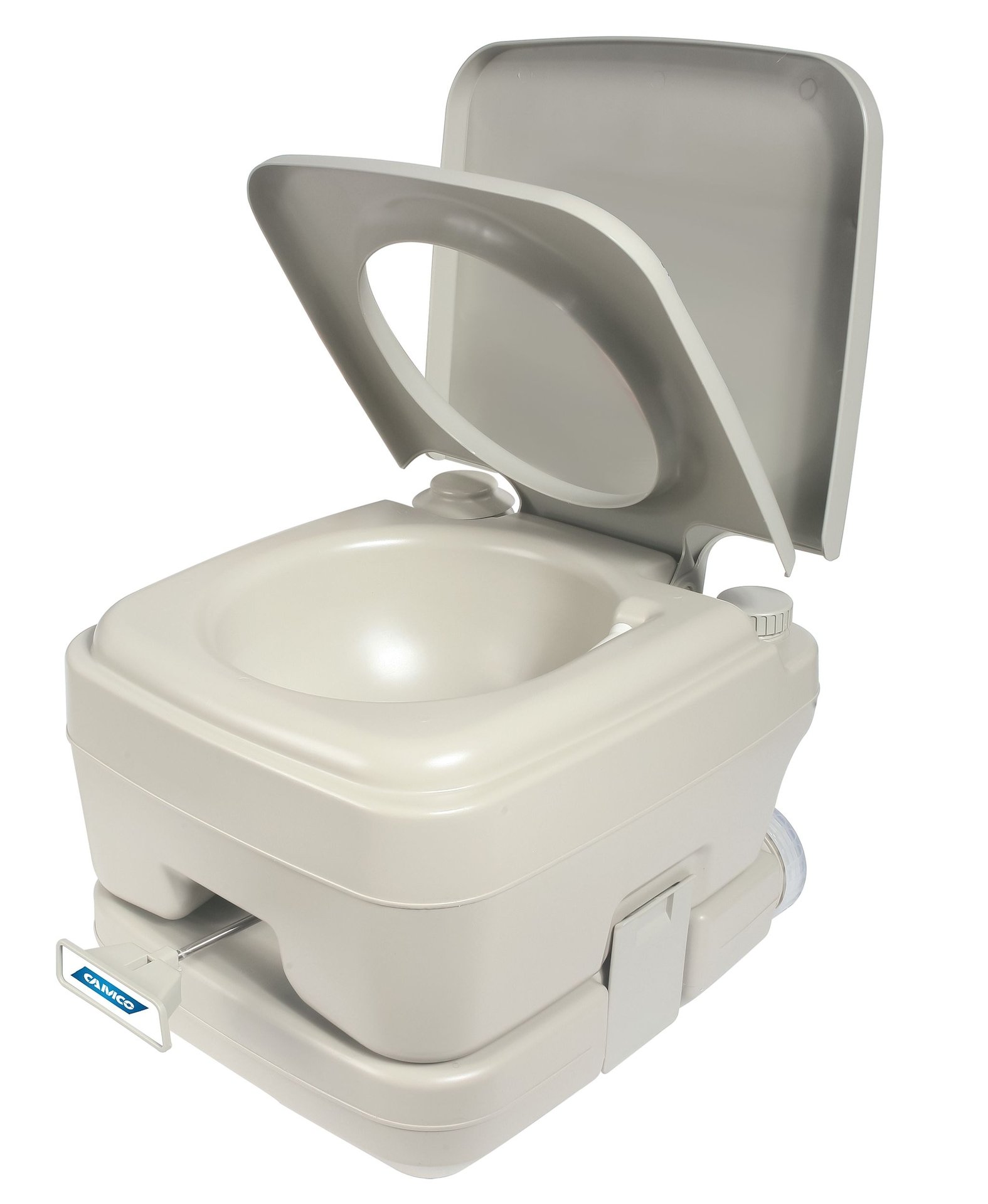
Best for: Vans, boats, and RVs needing a portable toilet without permanent plumbing.
- 2.6 gal detachable waste holding tank
- 2.5 gal fresh-water flush tank with bellows-type flush
- Sealing slide valve helps contain odors and leaks
- Polyethylene construction; 11 lb empty
Buying checklist
- Measure flange centerline to back wall and compare with 8.5, 10, or 11-inch rough-in needs.
- Measure overall depth, lid-open height, side clearance, and door swing.
- Decide standard height vs low profile based on platform height and user comfort.
- Check payload if choosing between plastic and ceramic; the difference can be roughly 15–29 lb.
- Confirm exact model number, color, seat material, and included mounting hardware.
- Order a fresh floor seal and inspect the flange, water line, and shutoff valve.
FAQ
Is the Dometic 320 better than the 310?
It is more comfortable when it fits. The 320 has a deeper elongated bowl and enameled wood seat. The 310 is better when the bathroom is compact or the rough-in is closer to 10 inches.
Will a Dometic 320 replace a 310 directly?
Not always. The 320 needs more rough-in space and more front-to-back room. Measure before ordering, even if both toilets use a similar flange pattern.
Is the Dometic 300 worth it?
Yes, for tight rough-ins and strict weight limits. Most owners who have space prefer ceramic for cleaning and durability, but the 300’s light weight is a legitimate advantage.
Do these toilets need electricity?
These gravity-flush models do not need electrical power for flushing. They do need a pressurized water supply and a holding tank directly below.
Bottom line
Choose the 320 for comfort, the 310 for compact ceramic value, and the 300 when weight or rough-in space rules. See also our propane guide and power guide.