By Michelle Johnson, SpecMyRig research desk. This comparison uses manufacturer-published specifications and recurring owner feedback patterns. We have not claimed hands-on load testing, and product links point to exact product pages for now and may be replaced with affiliate tracking links later; prices and availability can change. Always confirm the exact model number before purchase because specifications vary within each brand.
Champion vs Westinghouse Generator for RV Use: Quick Verdict
For most 30-amp RV owners choosing between Champion and Westinghouse dual-fuel inverter generators, the decision is less about the brand name and more about running watts, weight, starting method, and noise. Westinghouse iGen4500DF-class models generally publish stronger continuous output and offer electric and remote start, which suits owners who want convenience and a little more headroom for an air conditioner plus other loads. Champion counters with several 4500-watt-class models, including lighter recoil-start versions and electric-start versions, so the right Champion can be easier to lift or simpler to manage.
Pick Westinghouse for continuous watts and remote start; pick Champion when a specific model fits your weight and starting needs. Buy by running watts, not peak watts.
Who Each Brand Suits
Choose Westinghouse if
- You want electric or remote starting from inside the RV or truck cab area.
- You need the strongest continuous output in the 4500-watt class for one rooftop air conditioner plus converter, lights, and refrigerator loads.
- Published low noise ratings matter for campgrounds with quiet expectations.
Choose Champion if
- You found a specific Champion model with the weight and starting method you prefer, including lighter recoil-start options.
- You value simple recoil starting without depending on a starter battery.
- Your chosen model includes the TT-30R RV outlet, parallel capability, and carbon-monoxide shutoff features you want.
- You plan to lift the generator into a truck bed or storage bay often and need to prioritize pounds over convenience features.
Skip both if
- You need to run two large air conditioners at once on a 50-amp rig without load management; a single 4500-class inverter may not be enough.
Comparison Table: Representative 4500-Class Dual-Fuel Models
| Specification | Westinghouse iGen4500DF class | Champion 4500W dual-fuel class |
|---|---|---|
| Gasoline output | About 4,500 peak watts and 3,700 running watts on published iGen4500DF figures | 4,500 peak watts; running watts vary by model, commonly 3,250 to 3,500 on gasoline |
| Propane output | About 4,050 peak watts and 3,330 running watts | Propane running watts are lower than gasoline; examples range from about 2,925 to 3,150 depending on model |
| RV outlet | TT-30R 30-amp RV receptacle on RV-ready models | TT-30R 30-amp RV receptacle on RV-ready models |
| Starting | Recoil, electric, and remote start on iGen4500DF models | Varies: recoil-only on lighter models, electric start on larger wheeled models |
| Weight and handling | Larger wheeled chassis, generally around 100 lb class; designed to roll | Wide range: some models about 52 lb, wheeled electric-start models near 99 lb |
| Noise | Published ratings as low as about 52 dBA on iGen4500DF materials | Commonly about 61 to 64 dBA depending on model and measurement distance |
| Power quality | Inverter output with low total harmonic distortion, commonly listed at or under 3% | Inverter output with low total harmonic distortion, commonly listed under 3% |
| Parallel capability | Available on parallel-capable models with the correct kit | Available on parallel-capable models with the correct kit |
Compare the exact model and manual, not just headline wattage.
What Matters for RV Owners
Running watts decide whether the air conditioner stays on
Peak watts describe brief surge capacity. Running watts describe what the generator can sustain. A typical 13,500 BTU rooftop air conditioner may draw roughly 1,300 to 1,700 running watts depending on conditions, with a higher startup surge. Add a converter charging batteries, a refrigerator, lights, and a microwave, and headroom disappears quickly. That is why the Westinghouse continuous-output advantage can matter, and why propane derating must be included in your math if you plan to run on propane.
Dual fuel, handling, and noise
Propane stores cleanly and can run long at light load, but output is lower than gasoline, so include that derating in your air-conditioner math. Weight and starting method shape daily use: lighter Champion recoil models suit solo lifting, while Westinghouse electric and remote start suits a fixed setup, with a starter battery to maintain. Published noise figures use specific test conditions, so check the exact sheet, follow campground hours, and run any generator outdoors only with exhaust directed safely.
Pros and Cons
Westinghouse strengths and limits
- Pros: stronger continuous output in this class, electric and remote start, low published noise, TT-30R outlet, inverter power quality.
- Cons: heavier wheeled chassis, starter battery maintenance, remote-start convenience matters less if you must move the unit often.
Champion strengths and limits
- Pros: broad model range, some much lighter options, recoil simplicity on selected models, TT-30R outlet and parallel capability on RV-ready versions.
- Cons: specifications vary widely by model, propane running watts can be notably lower, and some models publish higher noise than Westinghouse equivalents.
Best 5 RV inverter generators to compare
These five picks cover the dual-fuel and quiet-inverter choices most 30-amp RV owners compare. Westinghouse now lists the iGen5000DFc as its current dual-fuel model in this class, so its card uses the current published specs. Match running watts, outlet type, propane output, noise, and weight to your air conditioner and storage space before buying.
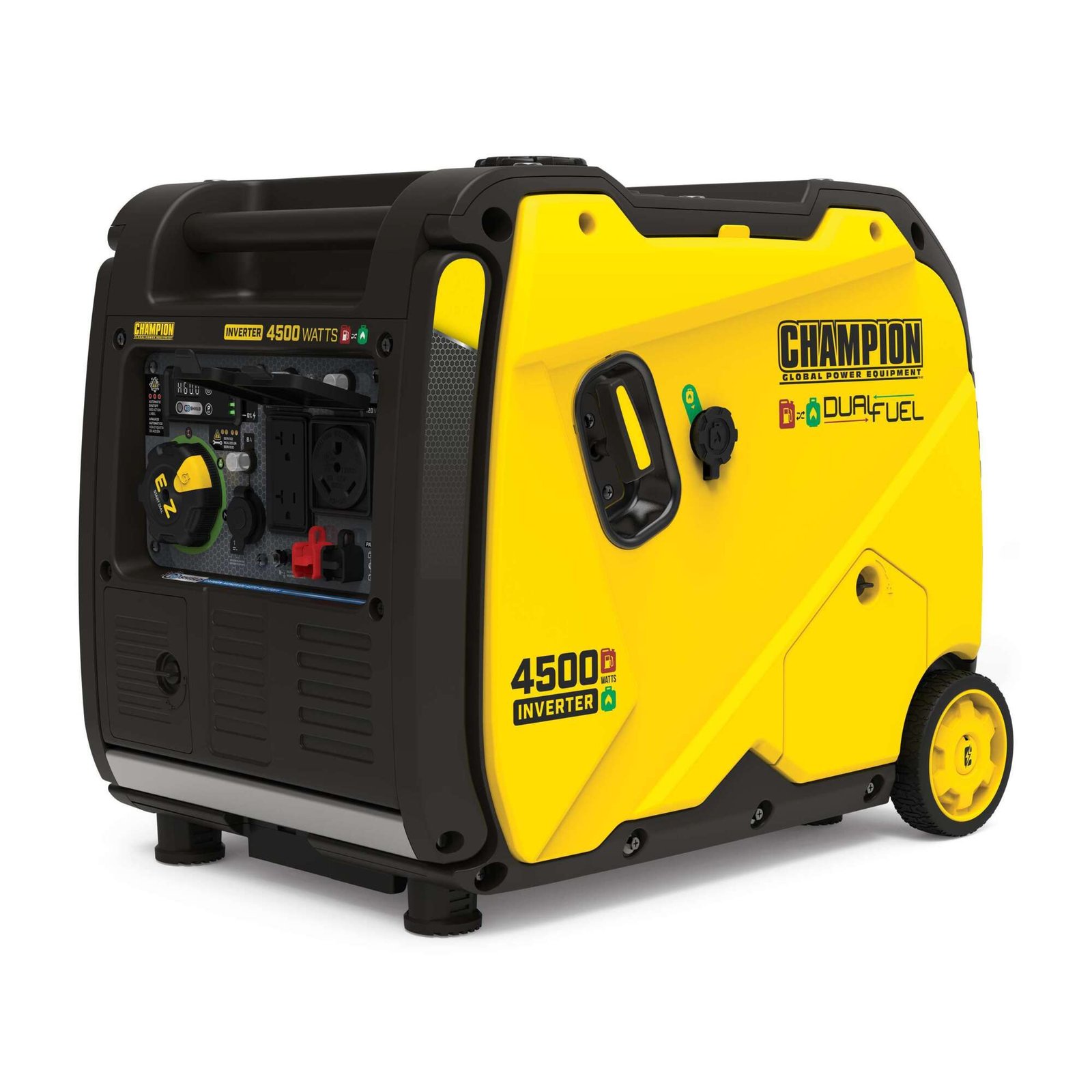
1. Champion 4500-Watt Dual Fuel Inverter Generator (201319)
Best for: Dual-fuel 30A RV power.
- 4500 starting / 3500 running watts on gasoline; 3150 running watts on propane
- 120V 30A TT-30R RV outlet plus 20A duplex and 12V automotive outlets
- Up to 14 hours on gasoline or 21 hours on propane at 25% load
- 61 dBA with CO Shield carbon monoxide auto shutoff
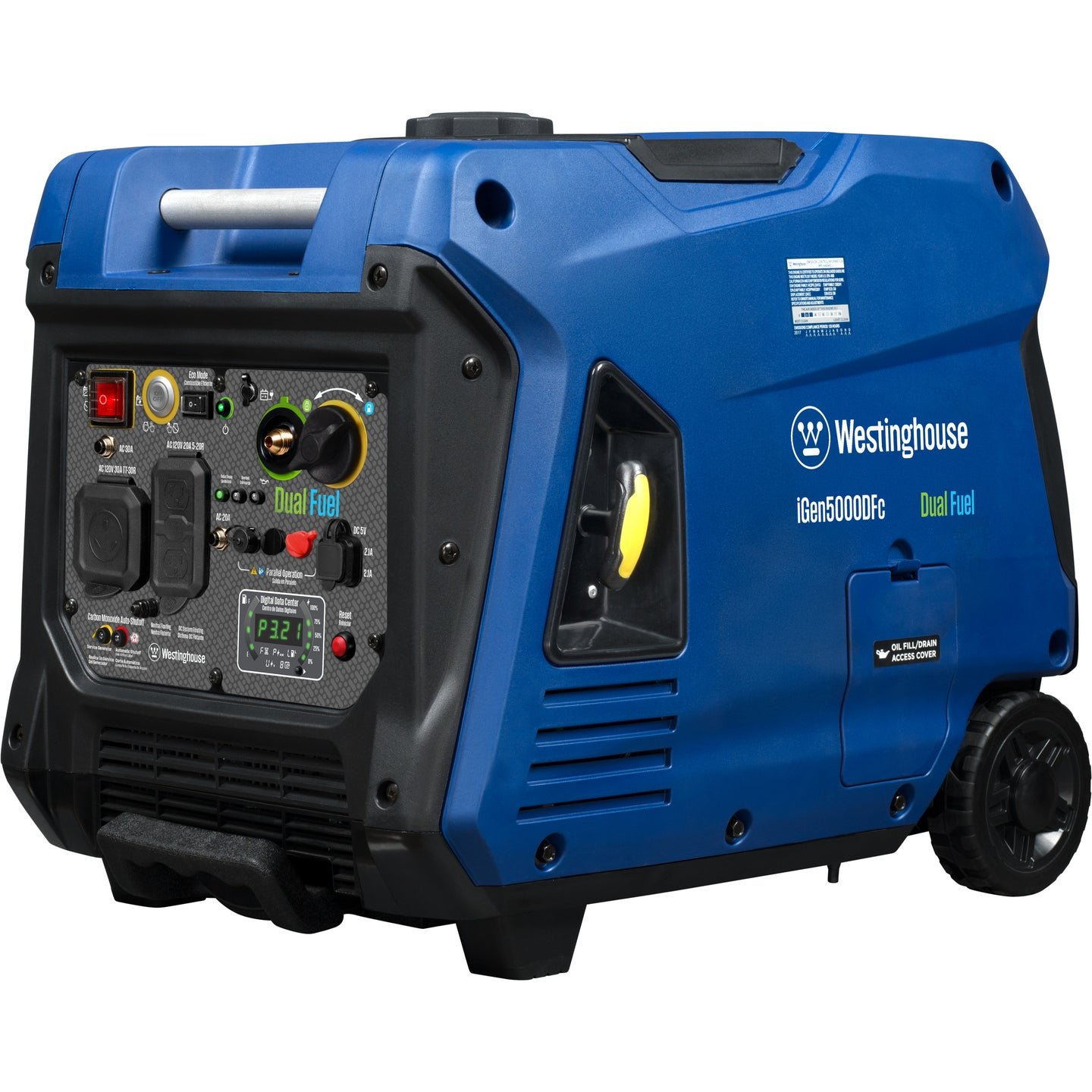
2. Westinghouse iGen5000DFc Dual Fuel Inverter Generator
Best for: Quiet dual-fuel power with remote start.
- 5000 peak / 3900 running watts on gasoline; 4500 peak / 3500 running watts on propane
- RV-ready 120V TT-30R 30A outlet
- 52 dBA noise level
- Up to 18 hours on a 3.4-gallon gas tank at 25% load; CO shutdown sensor
3. Honda EU2200i
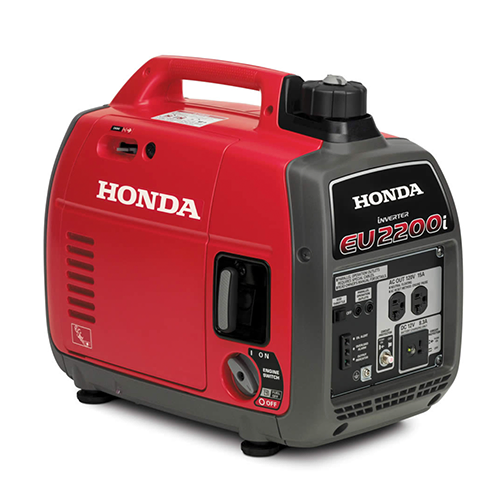
Best for: Quiet lightweight parallel-ready power.
- 2200W maximum / 1800W rated output
- 48 to 57 dBA noise level
- Parallel capability: two identical units up to 4400 watts
- 0.95-gallon tank, up to 8.1 hours at 1/4 load; CO-MINDER detection
4. Yamaha EF2200iS
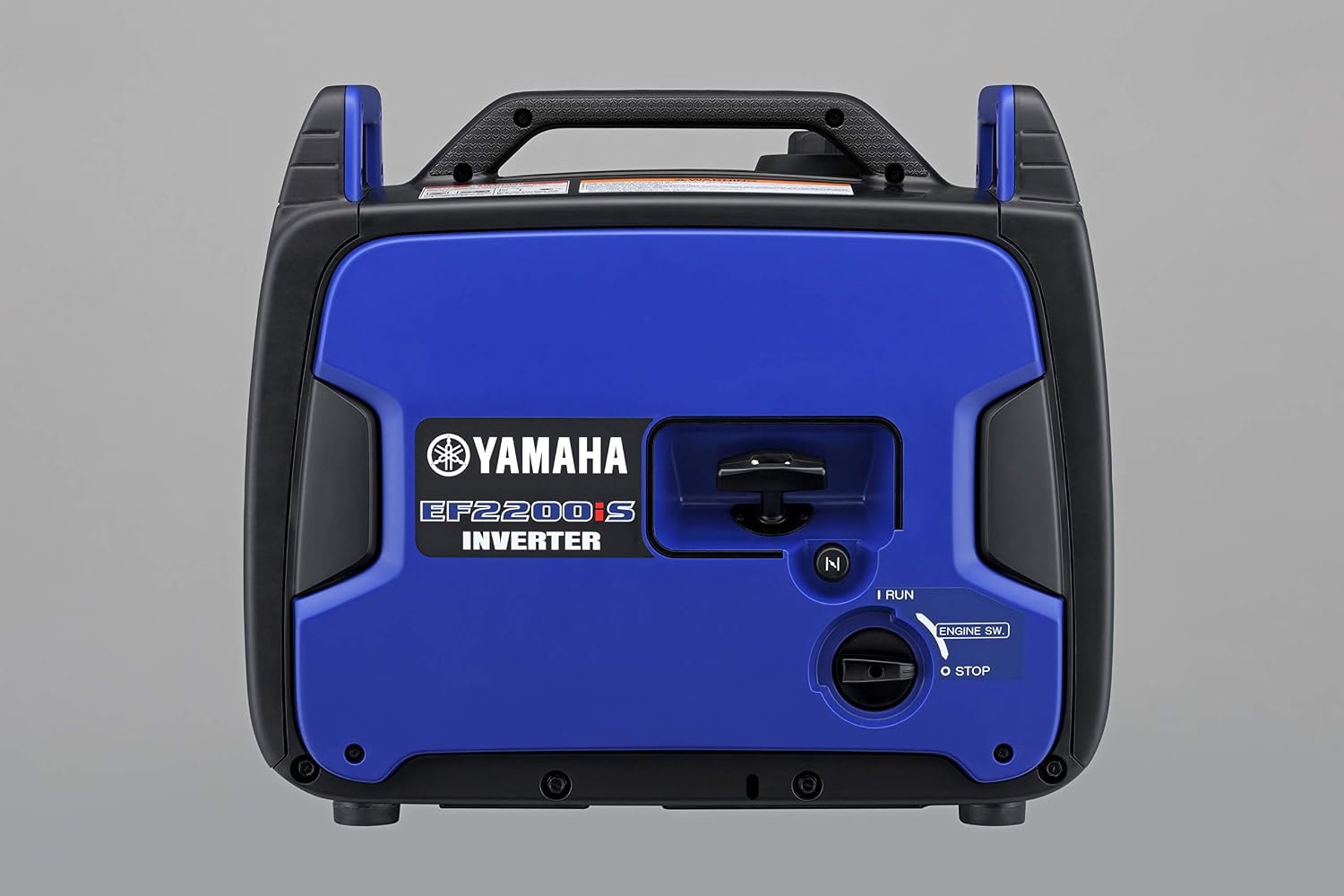
Best for: Long-runtime 2200W inverter.
- 2200W maximum / 1800W rated output
- 1.24-gallon tank with up to 10.5 hours at 1/4 load
- Twin Tech parallel function for connecting two units
- 57 to 65 dBA noise level
5. Generac iQ3500
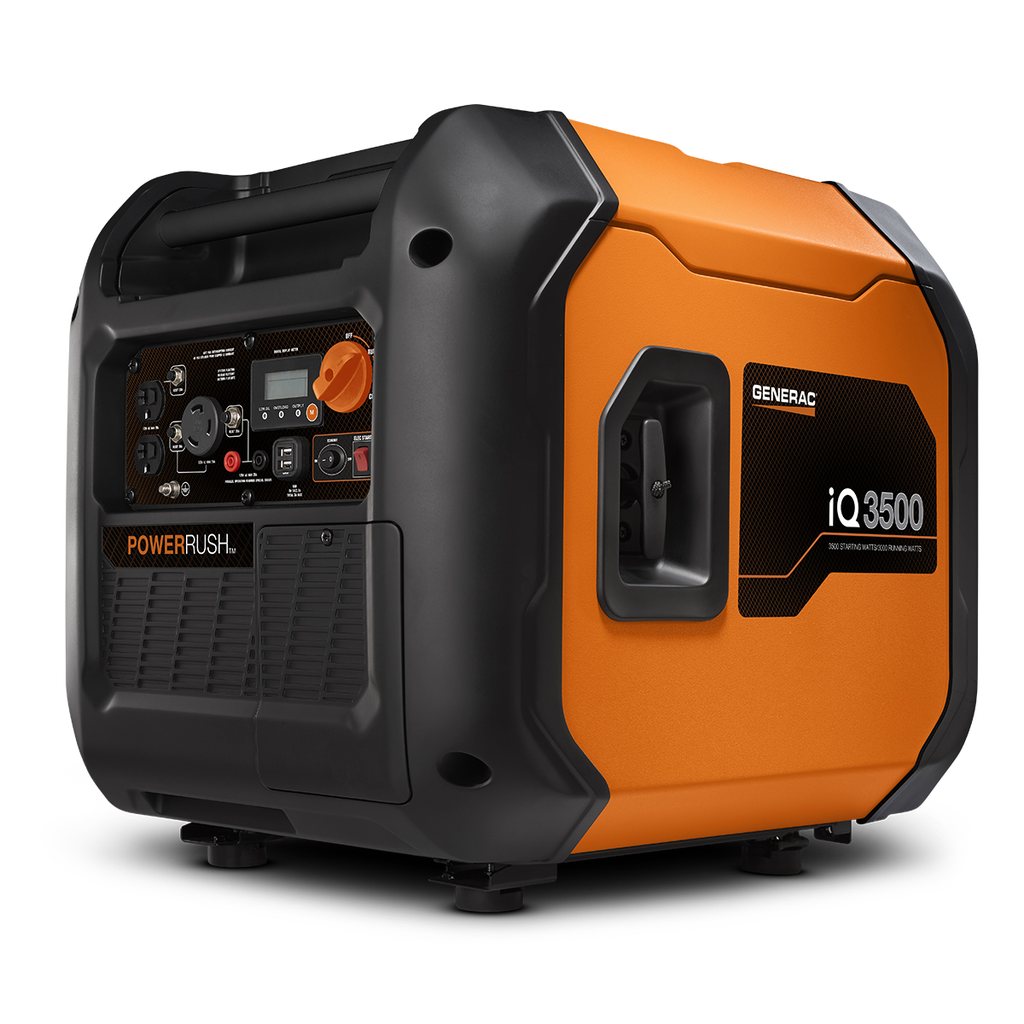
Best for: Electric-start 3000W inverter.
- 3500 starting / 3000 running watts
- Electric start with recoil backup
- 2.6-gallon tank, up to 14.1 hours at 25% load
- 120V 30A L5-30R outlet (twist-lock, not TT-30R); COsense monitoring
Buying Checklist
- Add up running watts for your air conditioner, converter, refrigerator, and other simultaneous loads; leave headroom for startup surge.
- Compare gasoline and propane running watts separately for the exact model number.
- Confirm a TT-30R outlet, inverter output, low THD, and carbon-monoxide shutoff if those features matter to you.
- Weigh the generator honestly: can you lift it safely, or will you roll it?
- Check tank size, runtime at your expected load, parallel-kit compatibility, and warranty terms.
- Verify the current price, included propane hose, and return terms on the product page before buying.
Frequently Asked Questions
Can a 4500-watt inverter run an RV air conditioner?
Often yes for one typical 13,500 BTU unit, but it depends on running watts, startup surge, altitude, temperature, and other loads. Compare continuous output on the fuel you will use, not peak watts.
Is propane better than gasoline for RV generators?
Propane stores well and can run long at light load, but output is lower. Gasoline usually gives maximum watts. Dual fuel lets you choose per trip.
Do I need a TT-30R outlet?
For a 30-amp RV, a TT-30R outlet makes connection direct and avoids adapter compromises. Confirm the outlet is rated for the generator output you expect.
Bottom Line
Westinghouse is the convenience and headroom pick. Champion is the flexibility pick when a specific model matches your weight and starting preferences. Either way, buy by running watts on your chosen fuel and by the exact model number.
Pair this decision with our 6-volt vs 12-volt RV batteries guide, RV EMS vs surge protector guide, and weBoost Destination RV review. Read how we review and our affiliate disclosure before buying.